Carapaces
Curated by Orea • Evolution Across the Isolated Galápagos Islands
Definition
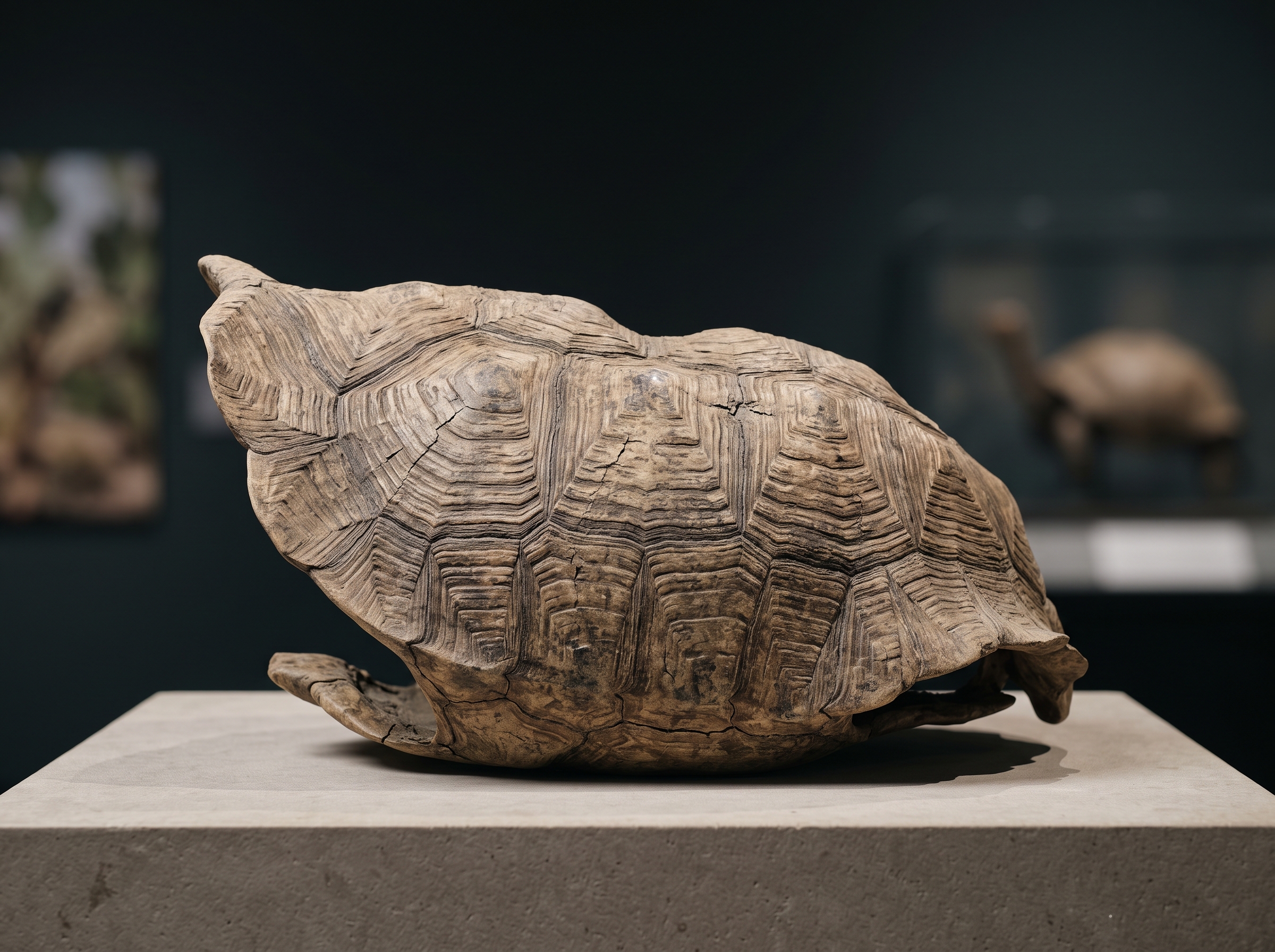
The bony or chitinous outer shells of tortoises and other testudines, which adapted in shape to suit different feeding heights.
In Context
Giant tortoises provided the most visible, macro-level evidence of this divergence. Islands with lush, humid highlands like Santa Cruz hosted tortoises with dome-shaped carapaces. These animals grazed on low-lying grasses and green vegetation that covered the ground year-round, requiring no upward reach. Domed shells protected their necks from predatory hawks while restricting vertical movement.
Primary Source
Evolution Across the Isolated Galápagos Islands
An exploration of the Galápagos Islands and how extreme volcanic isolation created a natural laboratory for Charles Darwin to observe the ruthless efficiency of natural selection.
Read Study (17 min) →Artifacts
Glossary
- pāhoehoe
- A type of basaltic lava that forms a smooth, billowy, or ropy surface under fluid cooling conditions.
- tectonic uplift
- The geological process where the Earth's crust is raised vertically, frequently caused by tectonic plate collision or hotspot activity.
- cromwell current
- A cold, nutrient-rich submarine current flowing eastwards along the equator that upwells at the Galápagos, feeding marine algae and food webs.
- caltrop
- A tough, thorny weed whose woody, puncture-resistant seeds became the primary food source for finches during severe droughts.
- natural selection
- The key evolutionary mechanism where individuals with advantageous physical traits survive and reproduce at higher rates.