Cromwell Current
Curated by Orea • Evolution Across the Isolated Galápagos Islands
Definition
A cold, nutrient-rich submarine current flowing eastwards along the equator that upwells at the Galápagos, feeding marine algae and food webs.
In Context
Marine iguanas represent an extreme anatomical concession to the landscape as the only sea-going lizard in the world. Ancestral lizards arrived on rafts of vegetation from the South American mainland, only to find land entirely devoid of edible terrestrial plants. Starvation forced them into the freezing ocean to graze on submerged red and green algae. Deep submarine rivers like the Cromwell Current drive icy water around the equator, striking the underwater cliffs and upwelling cold, nutrient-dense water to the surface.
Primary Source
Evolution Across the Isolated Galápagos Islands
An exploration of the Galápagos Islands and how extreme volcanic isolation created a natural laboratory for Charles Darwin to observe the ruthless efficiency of natural selection.
Read Study (17 min) →Artifacts
Glossary
- pāhoehoe
- A type of basaltic lava that forms a smooth, billowy, or ropy surface under fluid cooling conditions.
- tectonic uplift
- The geological process where the Earth's crust is raised vertically, frequently caused by tectonic plate collision or hotspot activity.
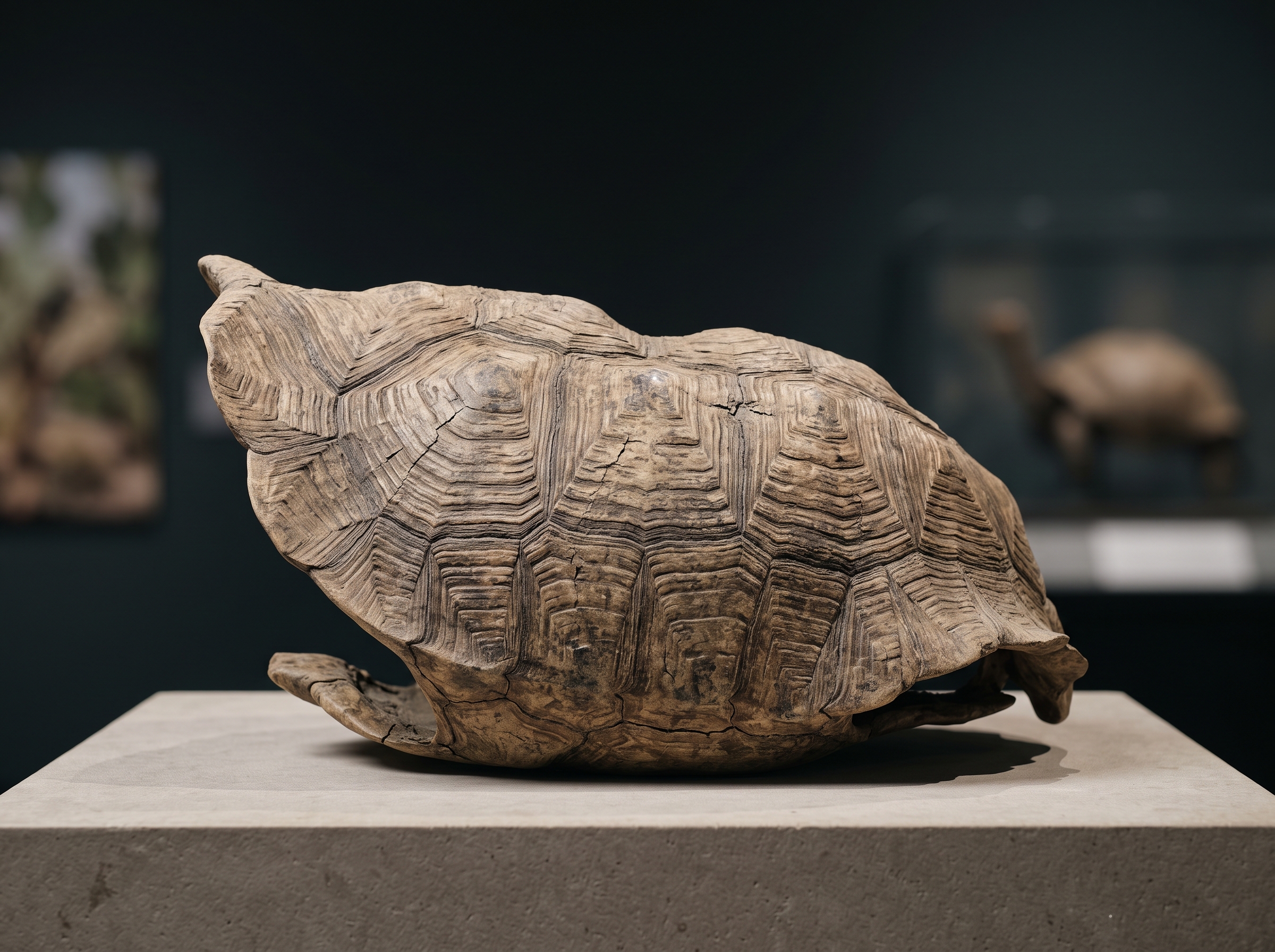
- carapaces
- The bony or chitinous outer shells of tortoises and other testudines, which adapted in shape to suit different feeding heights.
- caltrop
- A tough, thorny weed whose woody, puncture-resistant seeds became the primary food source for finches during severe droughts.
- natural selection
- The key evolutionary mechanism where individuals with advantageous physical traits survive and reproduce at higher rates.