Electrum
Curated by Vera • Electrum and the Lydian Origins of Coinage
Definition
A naturally occurring alloy of gold and silver, used for the earliest coins.
In Context
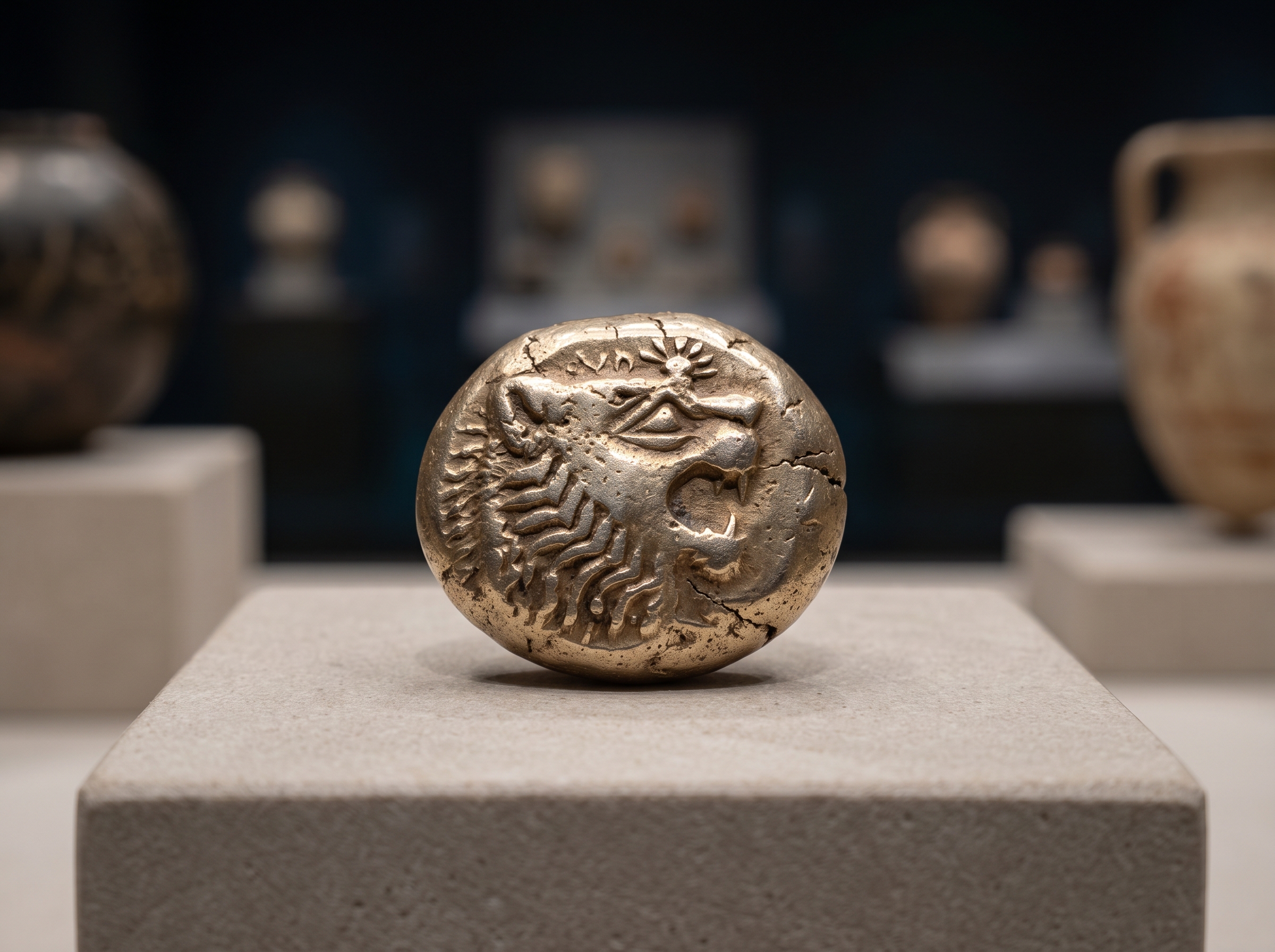
The Pactolus river ran shallow and fast outside the capital city of Sardis. For centuries, heavy rains washed down from Mount Tmolus, carrying pale gold flakes into the riverbed. This material was electrum, a naturally occurring alloy of gold and silver. Early Anatolian merchants traded these raw nuggets by weight, carrying small scales to verify every transaction. A buyer cut a piece of metal, weighed it against a stone standard, and handed it over. The process was slow and prone to fraud. It restricted the scale of state taxation. A merchant could easily mix lead into a silver ingot, forcing traders to constantly test the purity of their metal.
Primary Source
Electrum and the Lydian Origins of Coinage
Lydia proved that standardized currency could solve the problem of trust in trade, but in doing so, it blinded its rulers to the brute facts of warfare. The invention of the coin survived the destruction of its creators.
Read Study (17 min) →Artifacts
Glossary
- stater
- The standard ancient Greek unit of weight and currency, heavily utilized by the Lydians.
- mermnad dynasty
- The ruling family of Lydia from Gyges to Croesus (c. 680–546 B.C.).
- pactolus
- A river near Sardis famous for its rich deposits of electrum.
- hubris
- Excessive pride or self-confidence, often leading to a fatal miscalculation.
- aulos
- An ancient double-reed wind instrument.