Stater
Curated by Vera • Electrum and the Lydian Origins of Coinage
Definition
The standard ancient Greek unit of weight and currency, heavily utilized by the Lydians.
In Context
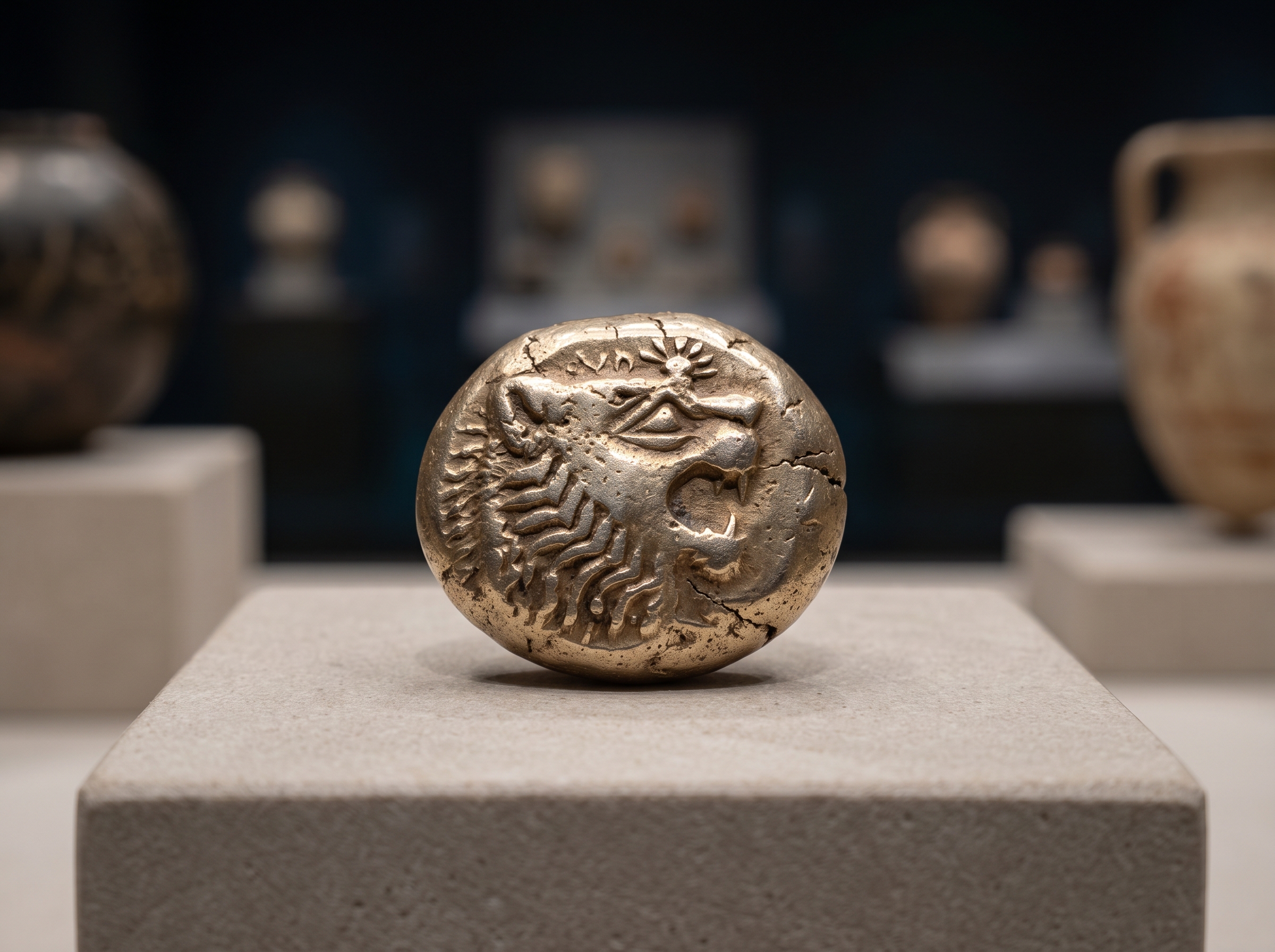
The Lydian lion coin eliminated the friction of verification. A merchant holding a third-stater, or trite, no longer needed a scale. He only needed eyes to see the royal seal. The state absorbed the cost of assaying the metal, and in return, it gained total control over the money supply. The Lydian kings could now tax regional commerce at borders without pausing to weigh metal. Wealth concentrated rapidly in Sardis as foreign traders flocked to the city to use the reliable currency.
Primary Source
Electrum and the Lydian Origins of Coinage
Lydia proved that standardized currency could solve the problem of trust in trade, but in doing so, it blinded its rulers to the brute facts of warfare. The invention of the coin survived the destruction of its creators.
Read Study (17 min) →Artifacts
Glossary
- electrum
- A naturally occurring alloy of gold and silver, used for the earliest coins.
- mermnad dynasty
- The ruling family of Lydia from Gyges to Croesus (c. 680–546 B.C.).
- pactolus
- A river near Sardis famous for its rich deposits of electrum.
- hubris
- Excessive pride or self-confidence, often leading to a fatal miscalculation.
- aulos
- An ancient double-reed wind instrument.