Mermnad Dynasty
Curated by Vera • Electrum and the Lydian Origins of Coinage
Definition
The ruling family of Lydia from Gyges to Croesus (c. 680–546 B.C.).
In Context
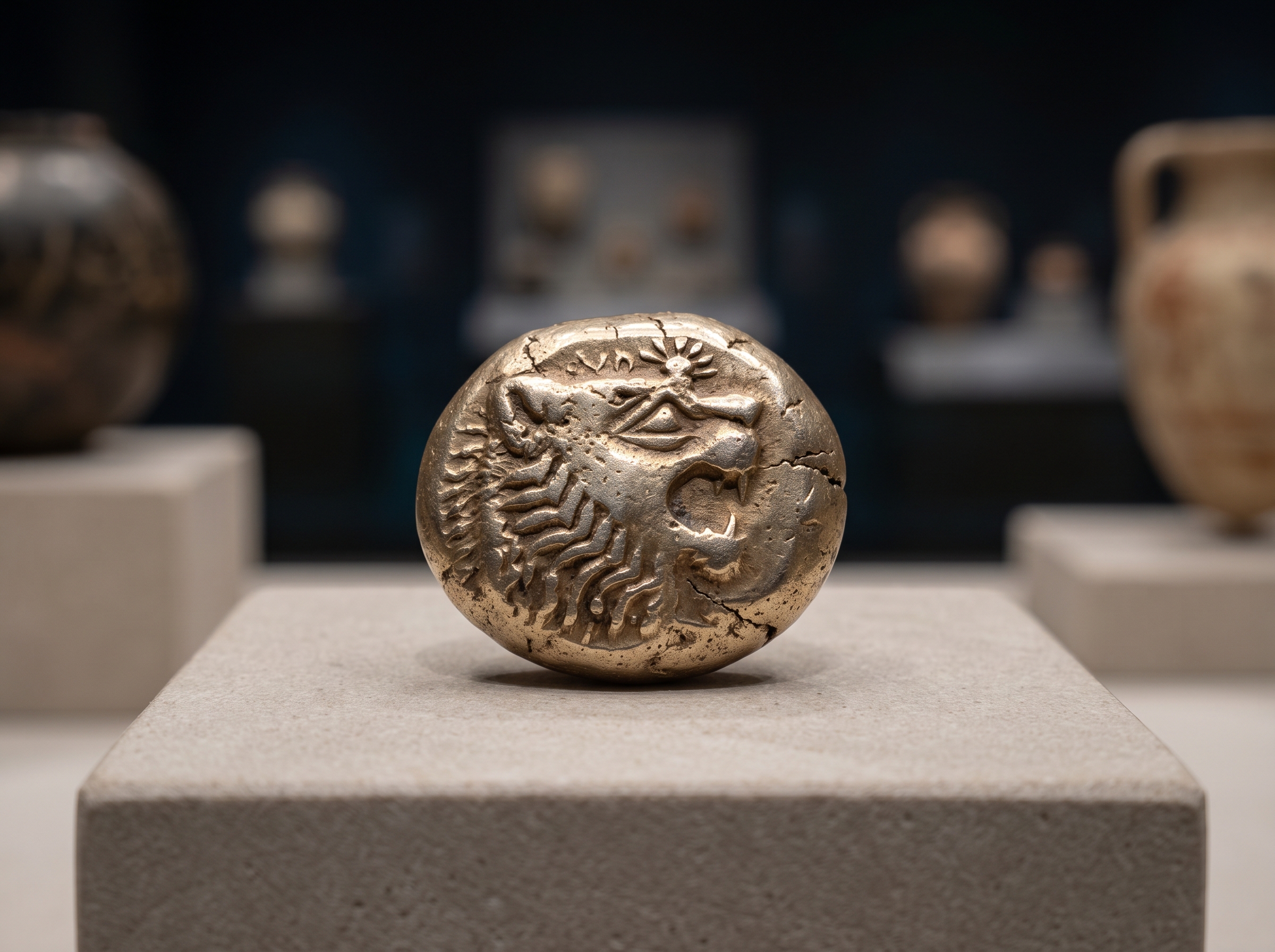
King Alyattes demanded a faster way to pay mercenaries and collect revenue. Around 610 B.C., his workshops began melting the Pactolus electrum into uniform oval blanks. A worker placed a blank onto a carved bronze anvil die, positioned a punch over it, and struck the punch with a heavy hammer. The blow forced the metal deep into the die, leaving a raised roaring lion on one side and rough punch marks on the other. Alyattes declared that these stamped pieces held a guaranteed value, backed by the royal house of the Mermnad dynasty. State officials punished forgery with immediate execution.
Primary Source
Electrum and the Lydian Origins of Coinage
Lydia proved that standardized currency could solve the problem of trust in trade, but in doing so, it blinded its rulers to the brute facts of warfare. The invention of the coin survived the destruction of its creators.
Read Study (17 min) →Artifacts
Glossary
- electrum
- A naturally occurring alloy of gold and silver, used for the earliest coins.
- stater
- The standard ancient Greek unit of weight and currency, heavily utilized by the Lydians.
- pactolus
- A river near Sardis famous for its rich deposits of electrum.
- hubris
- Excessive pride or self-confidence, often leading to a fatal miscalculation.
- aulos
- An ancient double-reed wind instrument.