Khumbu Icefall
Curated by Orea • Mount Everest Above 8,000 Meters in the Death Zone
Definition
A rapidly moving, treacherous glacier characterized by massive ice towers and deep crevasses on the Nepali side.
In Context
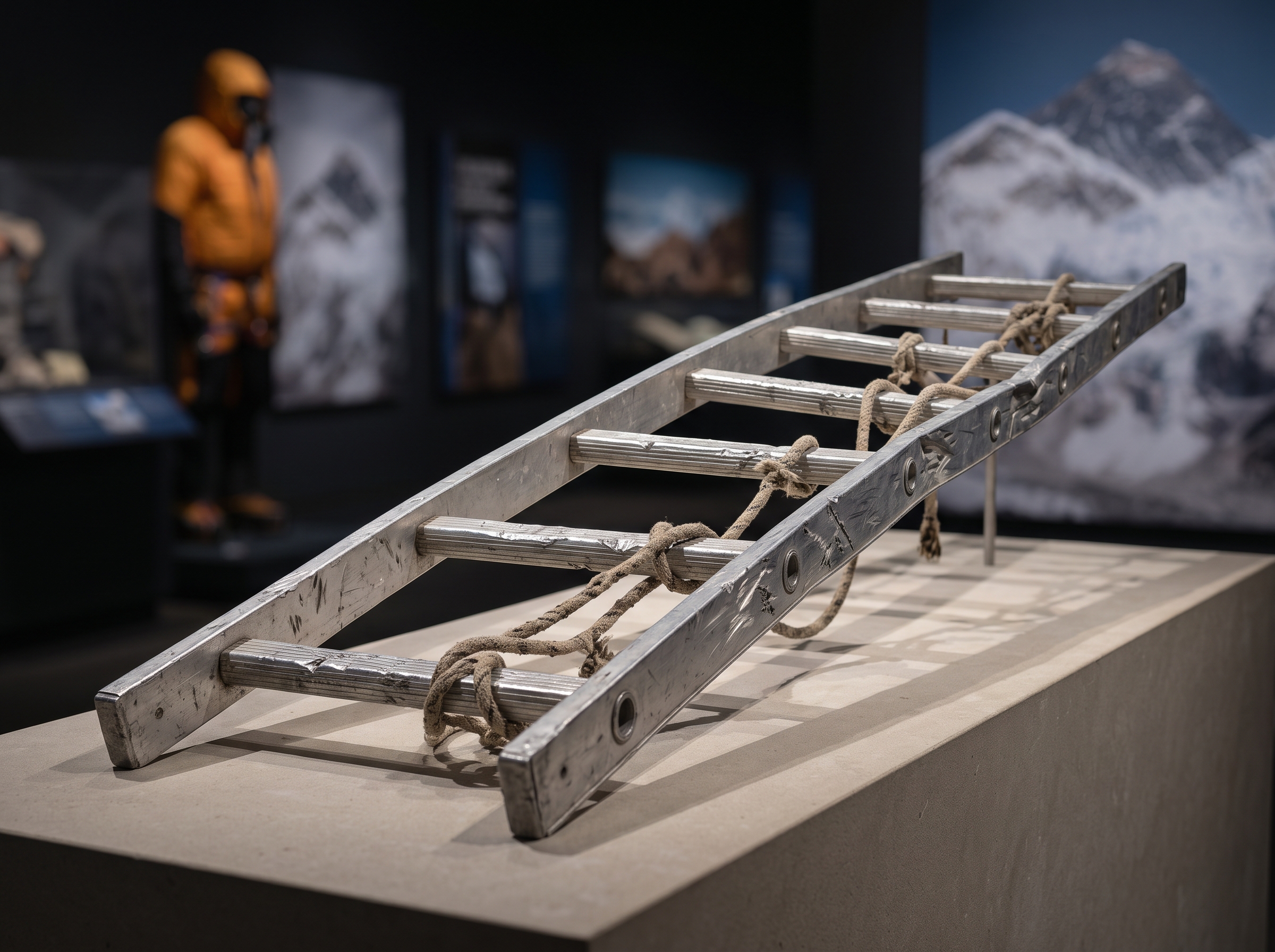
Access to the southern summit route requires navigating a chaotic labyrinth of shattered ice. Gravity forces the Khumbu Glacier down a steep valley, breaking the frozen mass apart as it cascades over a sharp drop. Deep blue crevasses and towering seracs form the constantly shifting Khumbu Icefall. Ice towers the size of office buildings lean precariously, groaning under their own weight. Thousands of tons of frozen water can collapse without a sound.
Primary Source
Mount Everest Above 8,000 Meters in the Death Zone
An exploration of Mount Everest not as a triumph, but as a rigid thermodynamic and biological barrier. When the partial pressure of oxygen drops to one-third of sea level, human carrying capacity drops to zero.
Read Study (16 min) →Artifacts

Glossary
- hypoxia
- A condition in which the body or a region of the body is deprived of adequate oxygen supply at the tissue level.
- death zone
- Altitudes above 8,000 meters (26,000 ft) where the amount of oxygen is insufficient to sustain human life.
- qomolangma
- The Tibetan name for Mount Everest, translating to 'Holy Mother'.
- hace
- High Altitude Cerebral Edema; a severe, often fatal altitude sickness causing the brain to swell with fluid.
- hape
- High Altitude Pulmonary Edema; a severe, life-threatening high-altitude illness where fluid accumulates in the lungs.