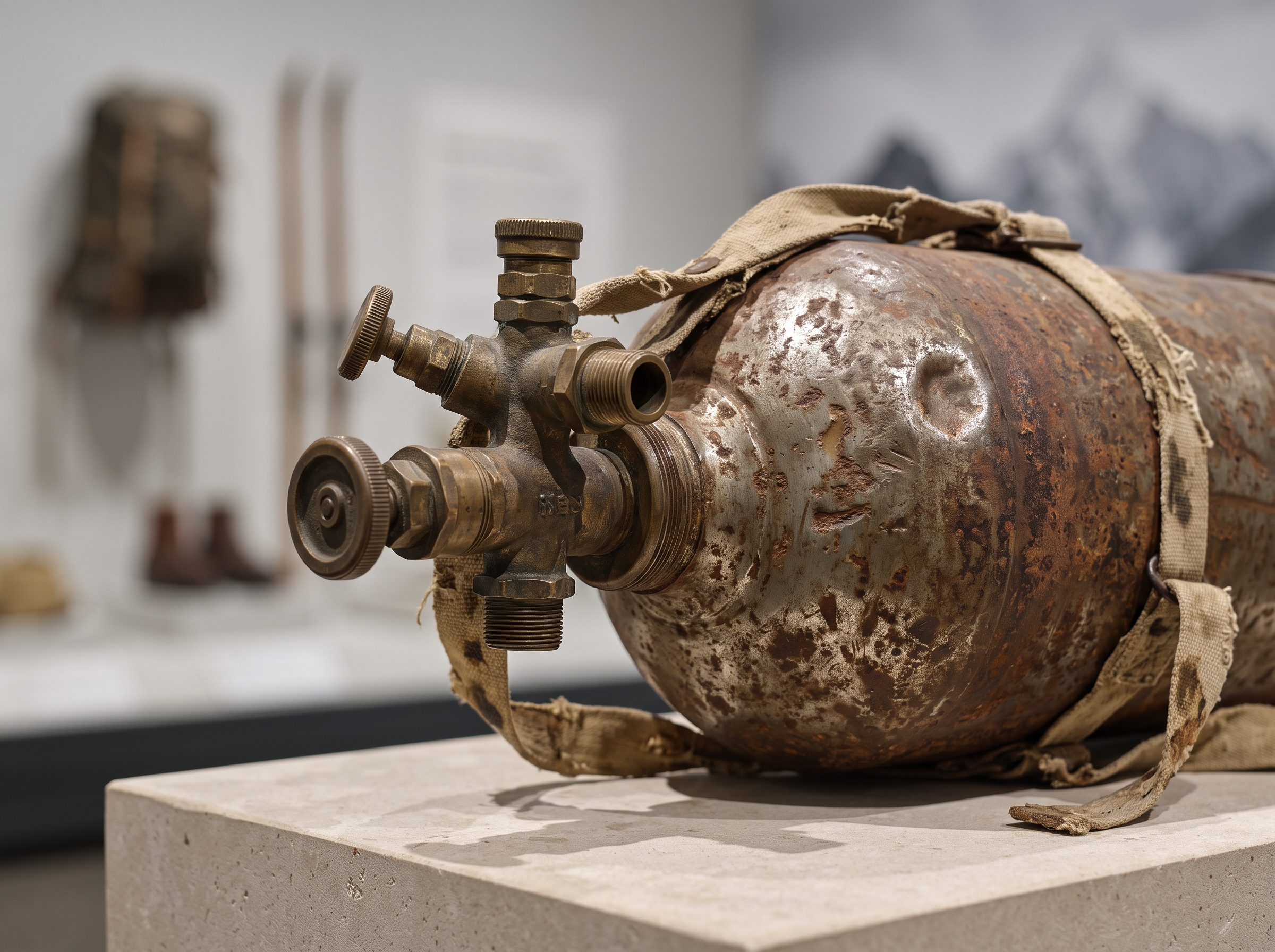
1924 Oxygen Cylinder
Curated by Orea • Mount Everest Above 8,000 Meters in the Death Zone
Artifact Details
A rusted, heavy steel cylinder with archaic brass valves and canvas straps, circa 1920s. The metal body is heavily dented and corroded.
Primary Source
Mount Everest Above 8,000 Meters in the Death Zone
At the base of the southern route up Mount Everest lies the Khumbu Icefall, a shattered river of blue ice shifting a meter a day. Deep crevasses gape open without warning. Massive ice towers, known as seracs, collapse under their own weight. The ice is a geological filter. Beyond it lies a thermodynamic and biological barrier where human carrying capacity drops to zero. At 8,848 meters, the partial pressure of oxygen falls to roughly one-third of sea-level density. The human body does not adapt to this environment. It slowly consumes itself. Breaching the 8,000-meter mark means entering the Death Zone, where ambition hits definitive physiological limits. The mountain remains unconquered, only survived on borrowed time.
Read Study (16 min) →Artifacts
Mallory's Snow Goggles
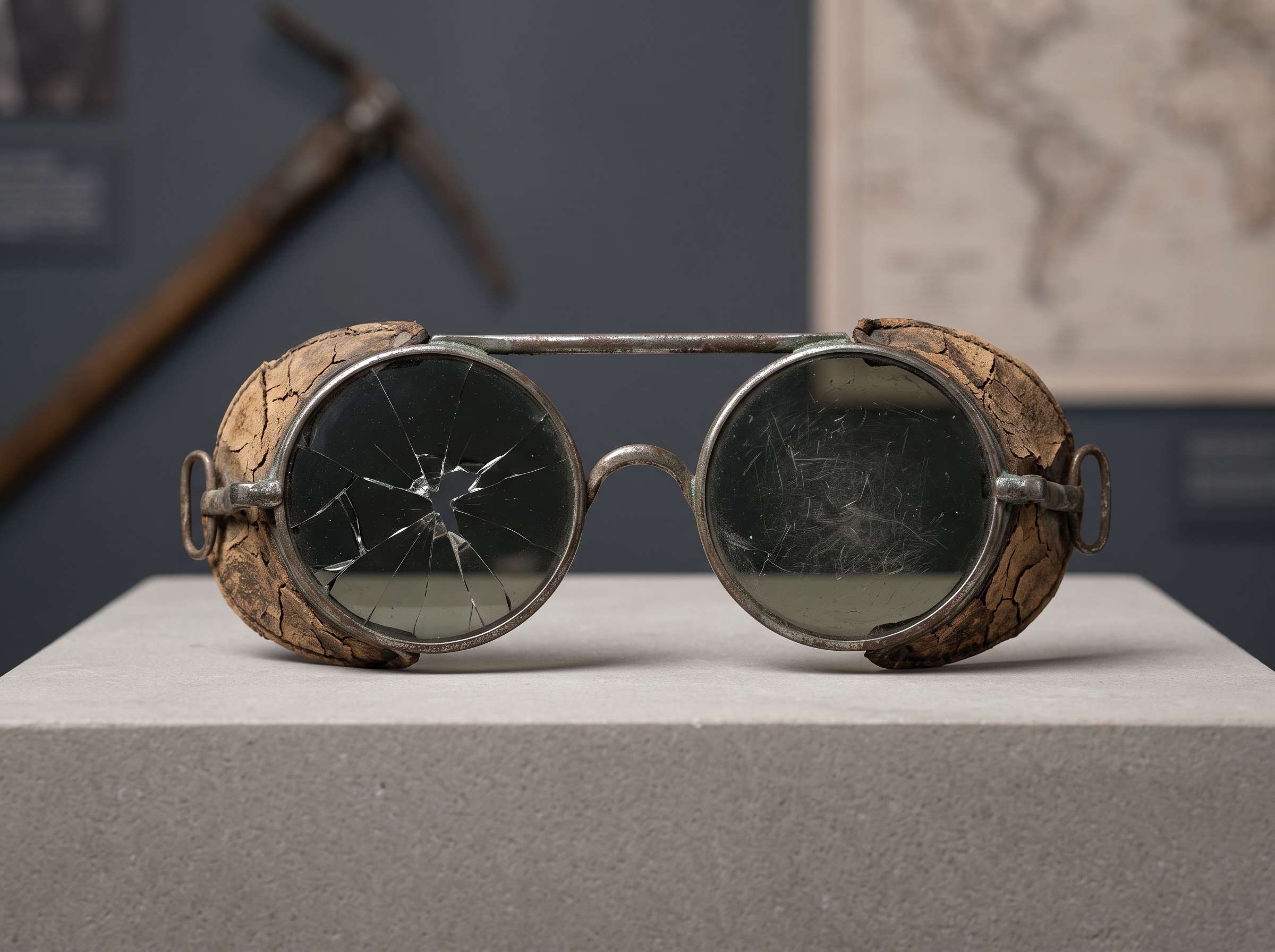
Shattered and sun-bleached, these tinted glass goggles were recovered from George Mallory's body in 1999.
Aluminum Crevasse Ladder
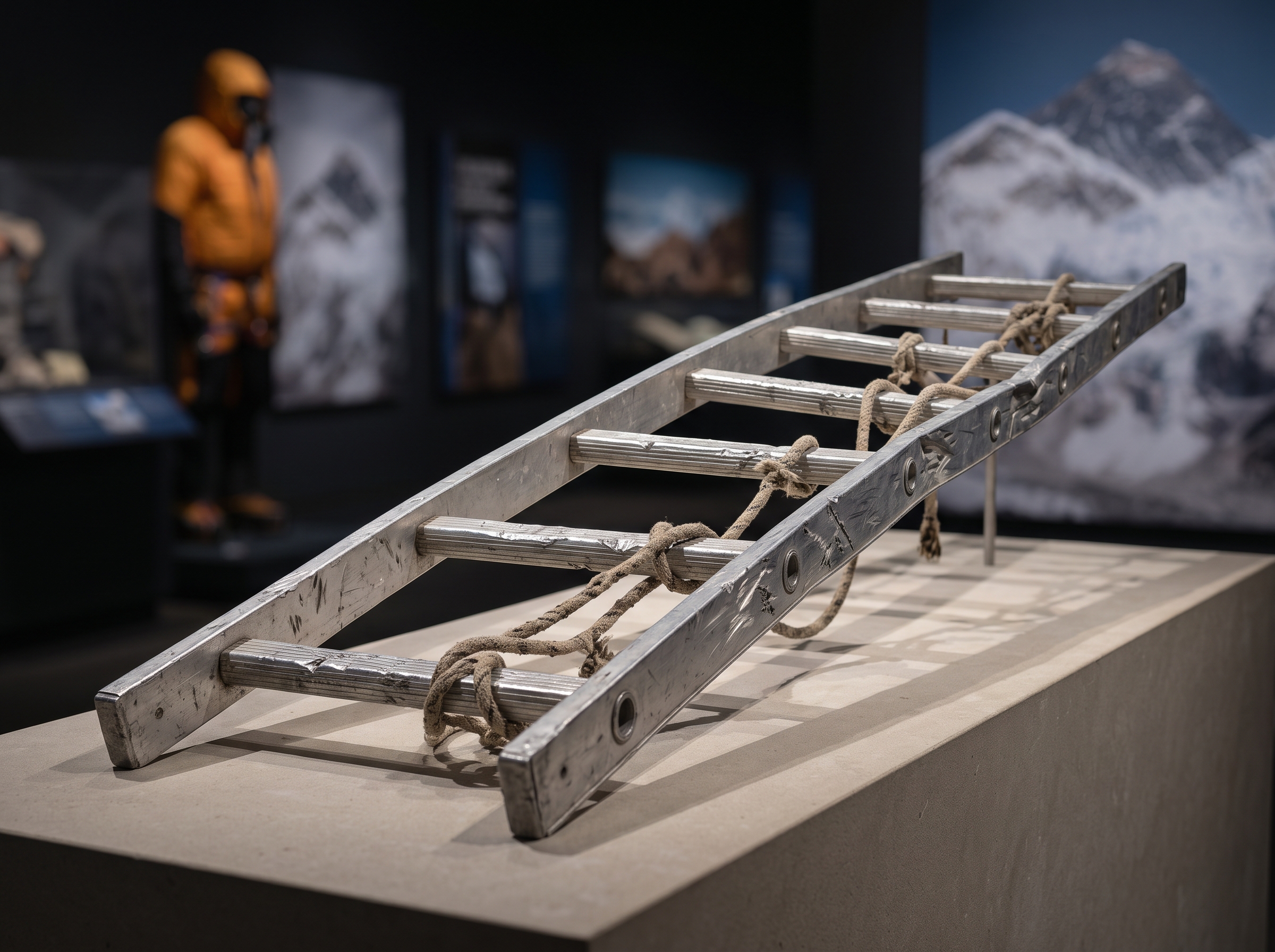
A standard aluminum ladder used by the 'Icefall Doctors' to bridge gaping crevasses in the Khumbu Icefall.
Qomolangma Limestone
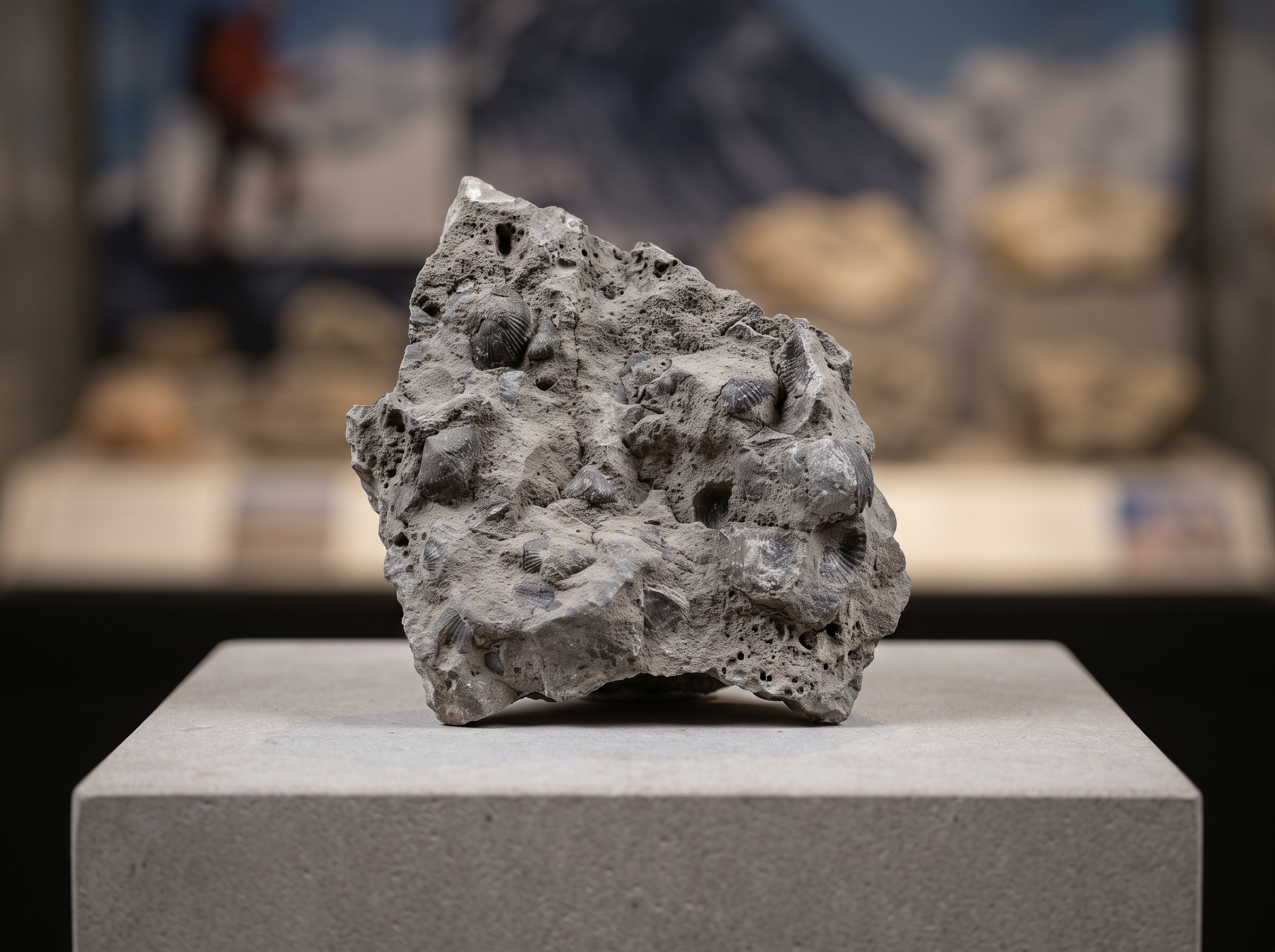
A fragment of Ordovician limestone from the summit pyramid, originally formed at the bottom of the ancient Tethys Ocean.
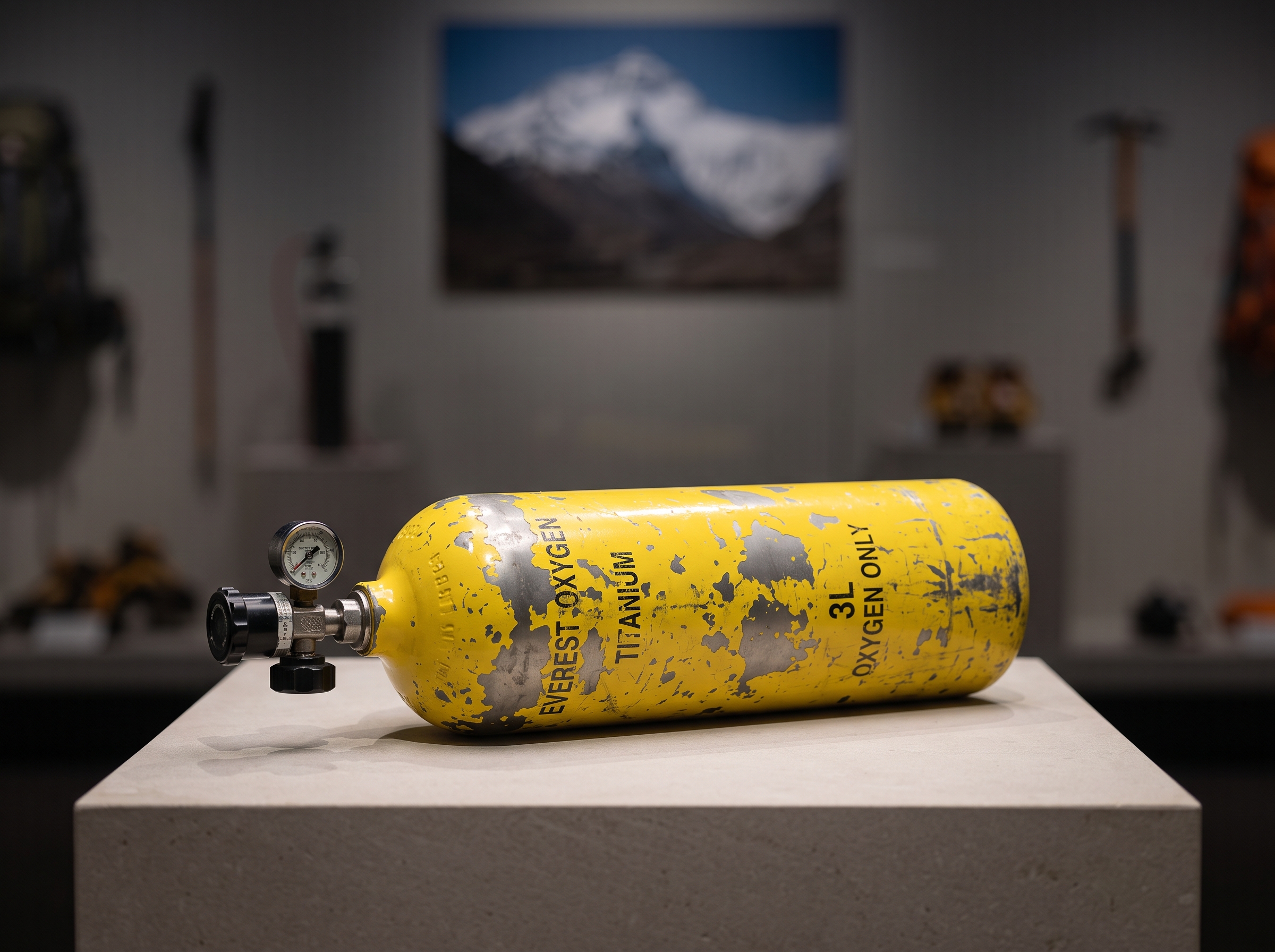
Discarded Titanium Bottle
A modern titanium oxygen bottle, representing the environmental toll and mass commercialization of the Death Zone.
Glossary
- hypoxia: A condition in which the body or a region of the body is deprived of adequate oxygen supply at the tissue level.
- death zone: Altitudes above 8,000 meters (26,000 ft) where the amount of oxygen is insufficient to sustain human life.
- qomolangma: The Tibetan name for Mount Everest, translating to 'Holy Mother'.
- khumbu icefall: A rapidly moving, treacherous glacier characterized by massive ice towers and deep crevasses on the Nepali side.