Qomolangma Limestone
Curated by Orea • Mount Everest Above 8,000 Meters in the Death Zone
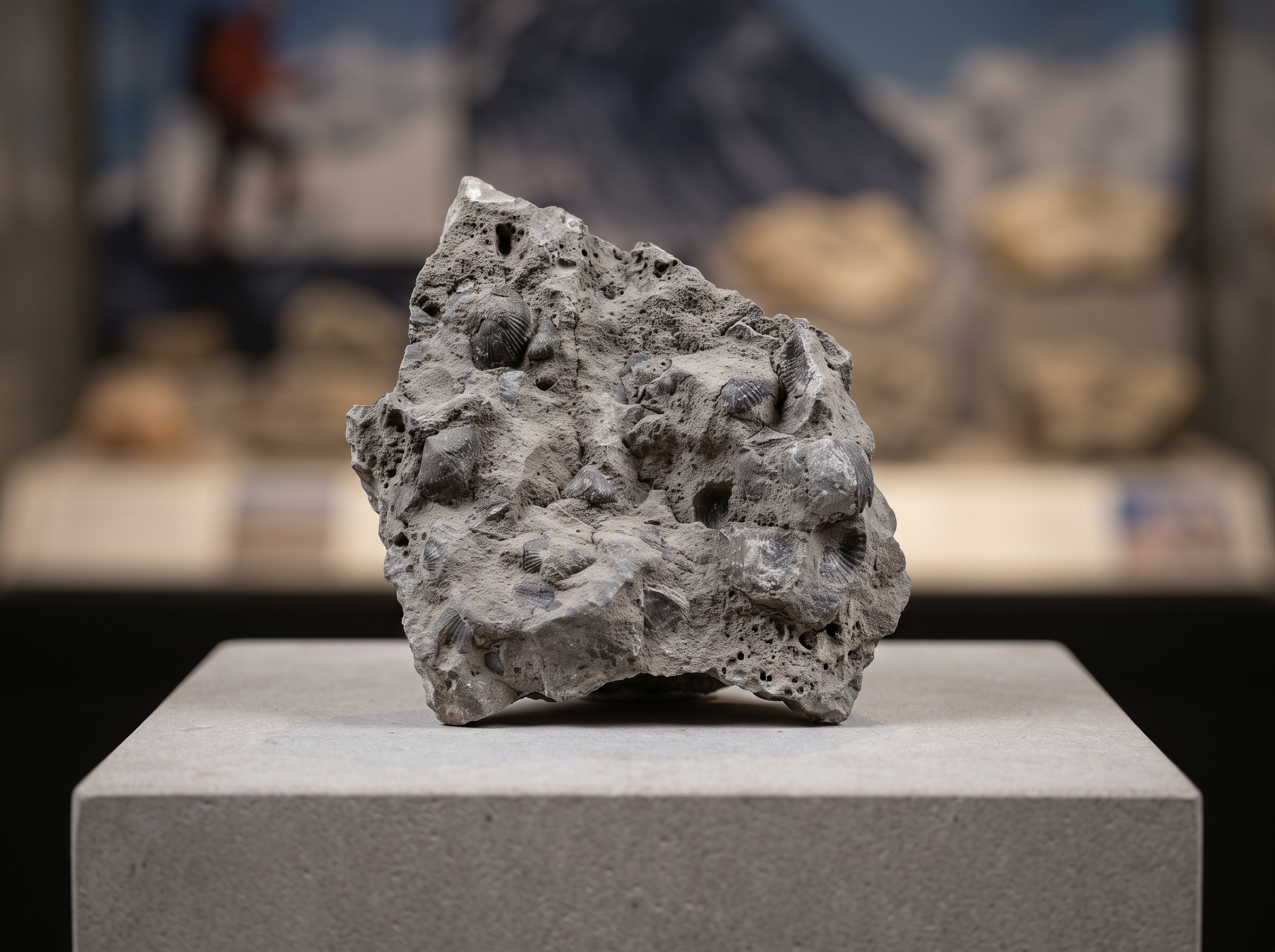
Artifact Details
A single, jagged piece of grey limestone featuring subtle marine fossil impressions and a highly porous, sharp-edged texture.
Primary Source
Mount Everest Above 8,000 Meters in the Death Zone
At the base of the southern route up Mount Everest lies the Khumbu Icefall, a shattered river of blue ice shifting a meter a day. Deep crevasses gape open without warning. Massive ice towers, known as seracs, collapse under their own weight. The ice is a geological filter. Beyond it lies a thermodynamic and biological barrier where human carrying capacity drops to zero. At 8,848 meters, the partial pressure of oxygen falls to roughly one-third of sea-level density. The human body does not adapt to this environment. It slowly consumes itself. Breaching the 8,000-meter mark means entering the Death Zone, where ambition hits definitive physiological limits. The mountain remains unconquered, only survived on borrowed time.
Read Study (16 min) →Artifacts
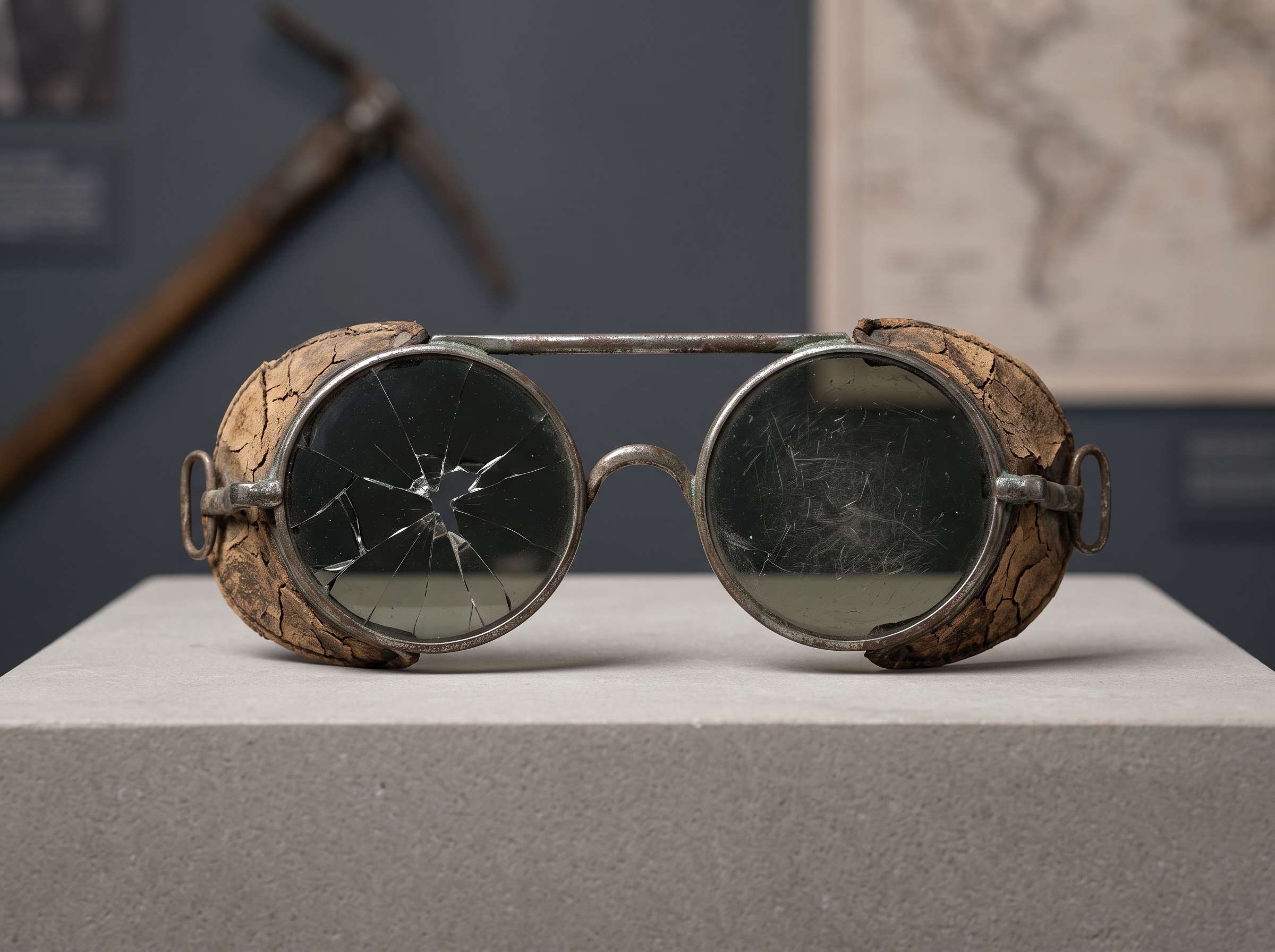
Mallory's Snow Goggles
Shattered and sun-bleached, these tinted glass goggles were recovered from George Mallory's body in 1999.
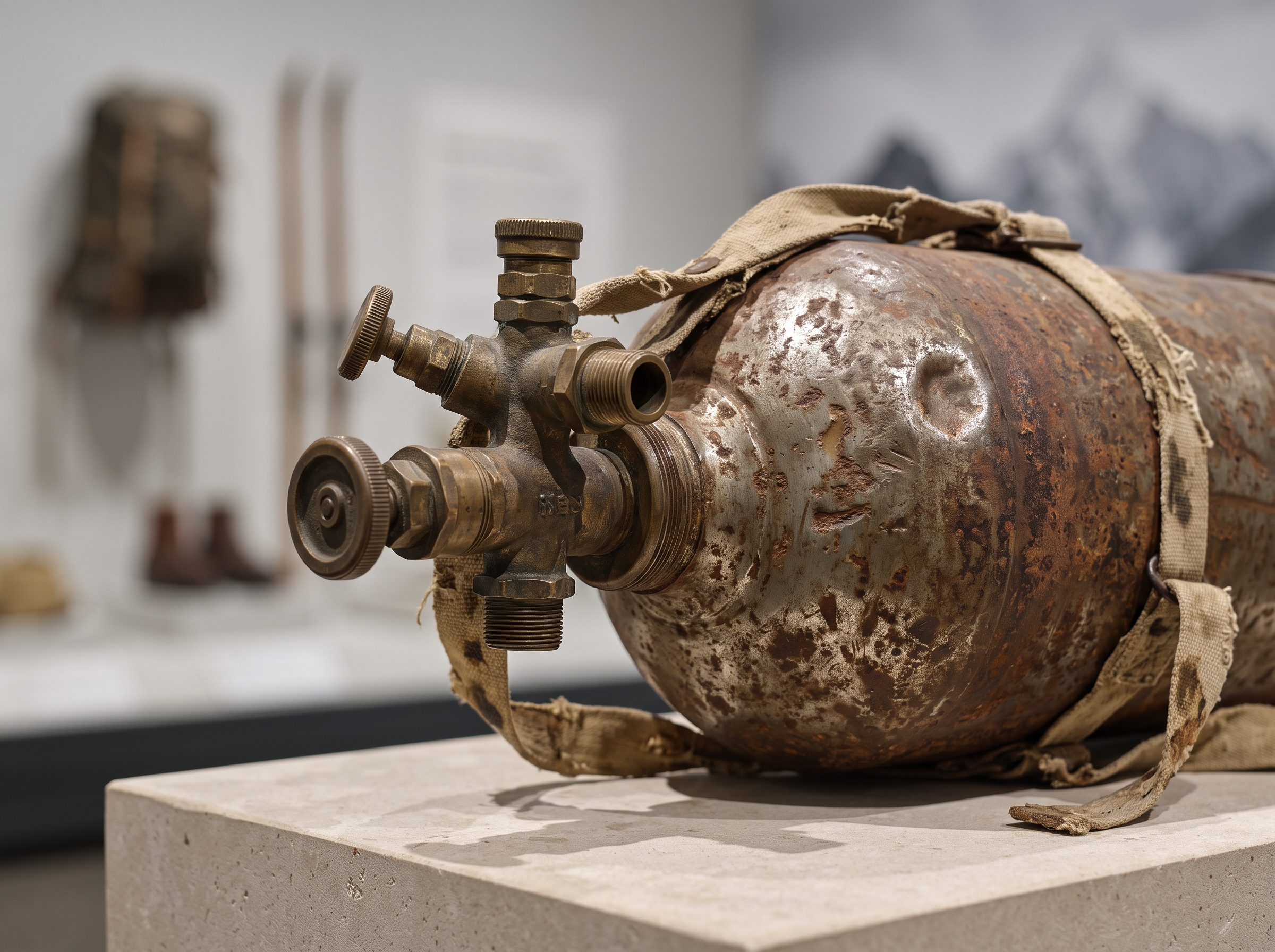
1924 Oxygen Cylinder
A primitive, heavy steel cylinder from the 1924 British expedition, illustrating the immense dead weight of early survival technology.
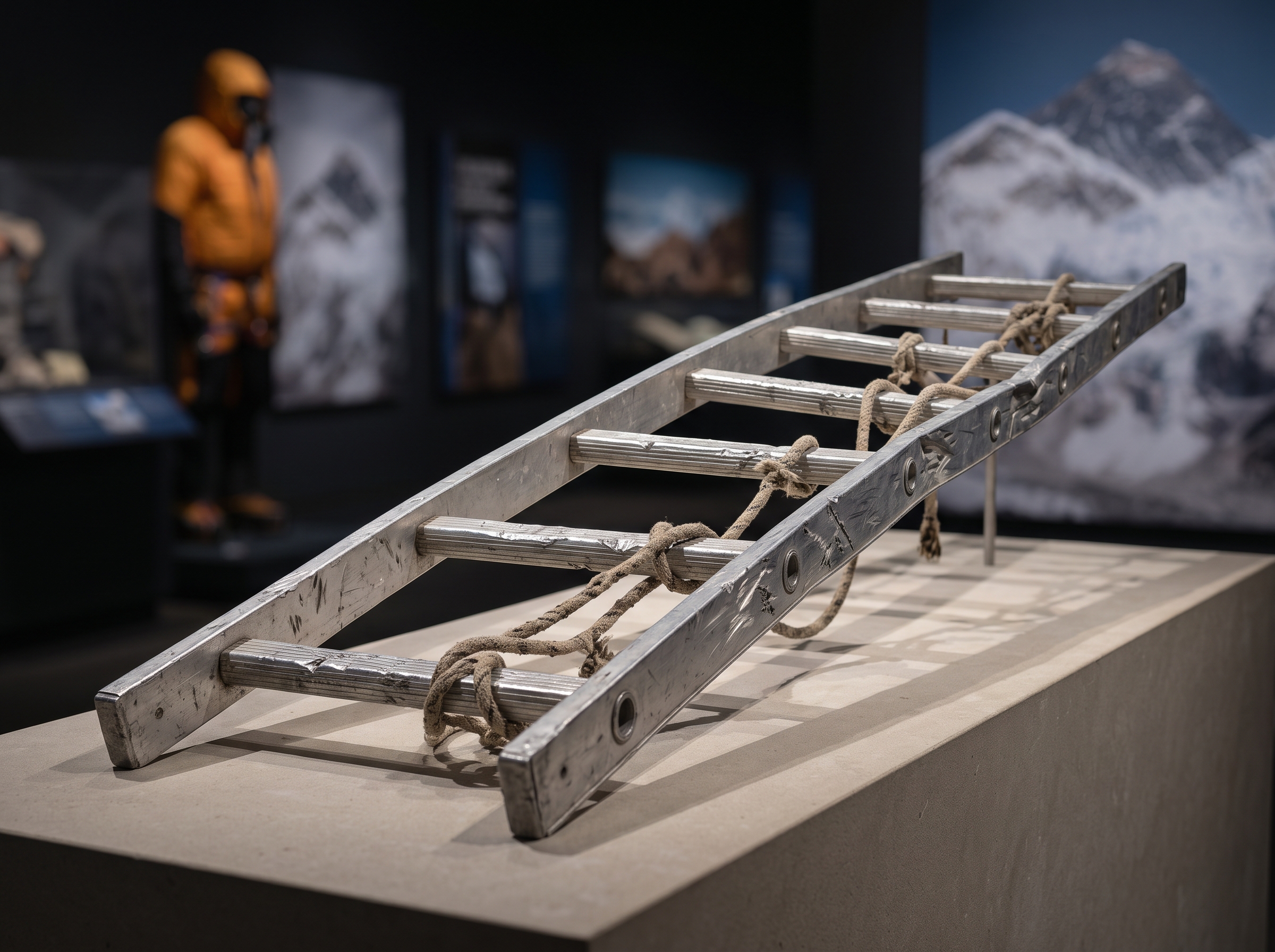
Aluminum Crevasse Ladder
A standard aluminum ladder used by the 'Icefall Doctors' to bridge gaping crevasses in the Khumbu Icefall.
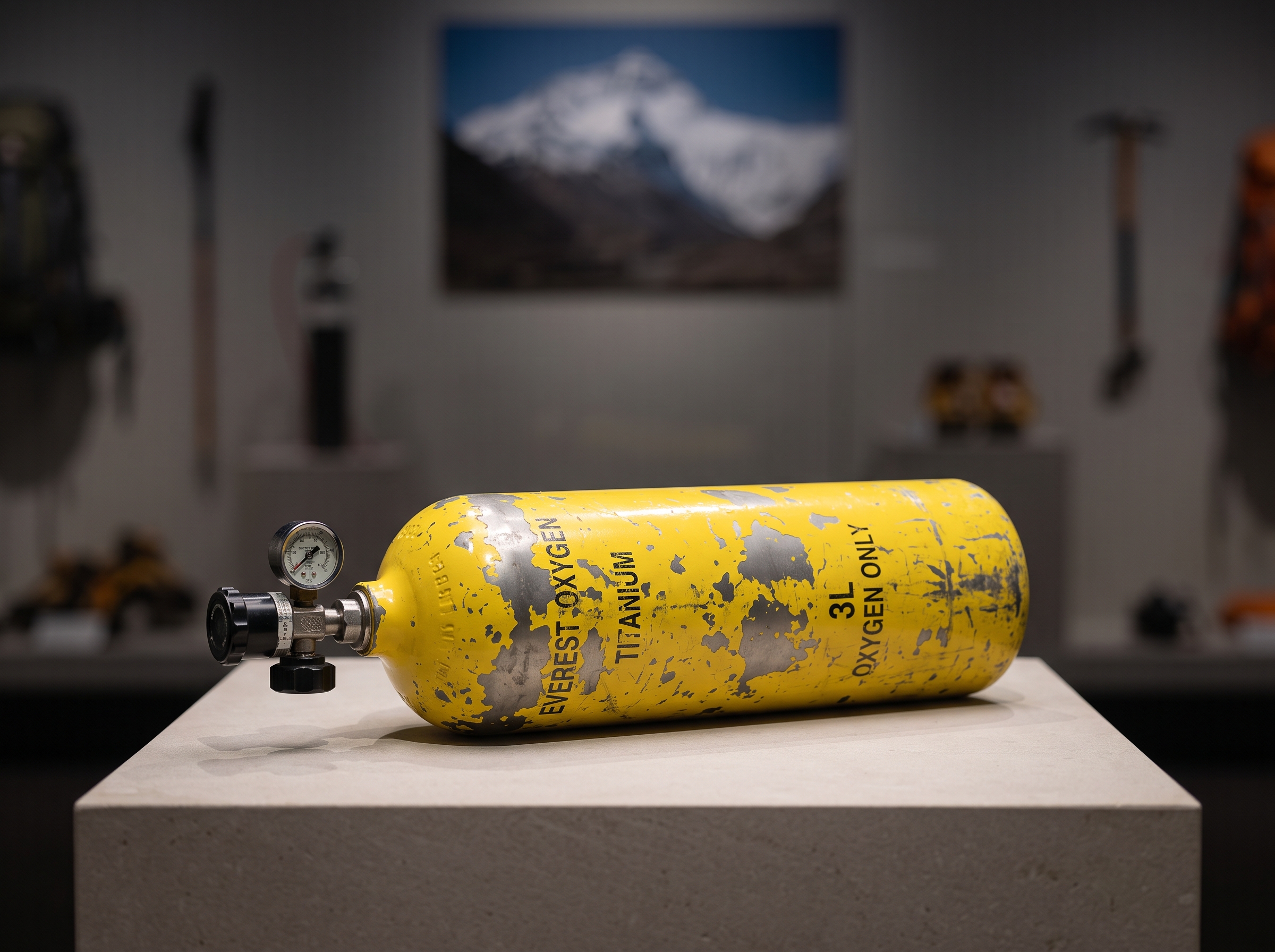
Discarded Titanium Bottle
A modern titanium oxygen bottle, representing the environmental toll and mass commercialization of the Death Zone.
Glossary
- hypoxia: A condition in which the body or a region of the body is deprived of adequate oxygen supply at the tissue level.
- death zone: Altitudes above 8,000 meters (26,000 ft) where the amount of oxygen is insufficient to sustain human life.
- qomolangma: The Tibetan name for Mount Everest, translating to 'Holy Mother'.
- khumbu icefall: A rapidly moving, treacherous glacier characterized by massive ice towers and deep crevasses on the Nepali side.