Red Scoria Pukao
Curated by Elian • Rapa Nui Moai Carved from Volcanic Tuff
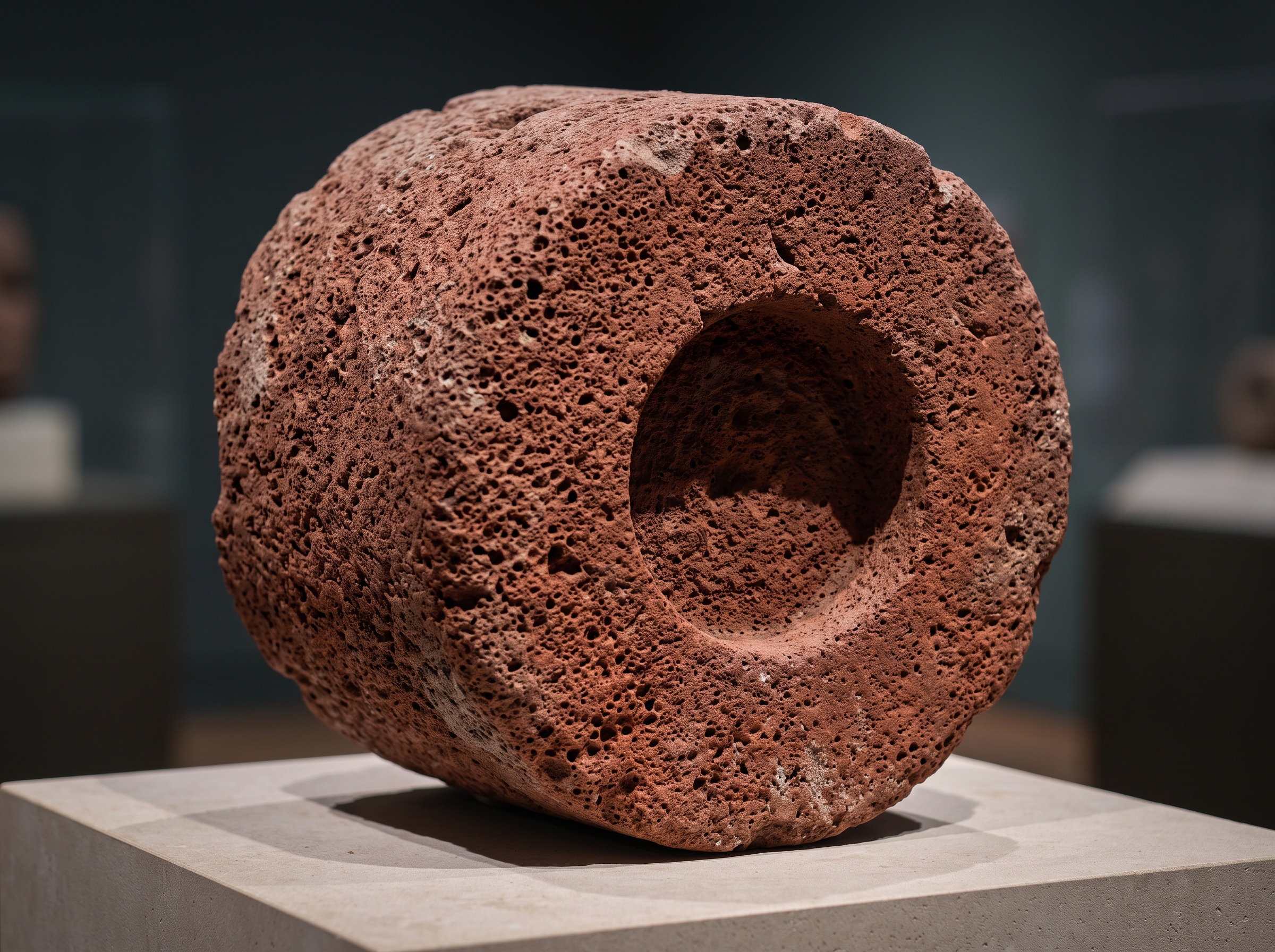
Artifact Details
A squat, thick cylinder carved entirely from deeply pitted, rust-red volcanic scoria rock. A deep, precise circular hollow is carved into the flat underside. The upper surface features a small, raised cylindrical topknot. The outer edges are rough, highly porous, and structurally abraded.
Primary Source
Rapa Nui Moai Carved from Volcanic Tuff
High on the inner slope of Rano Raraku crater, a 14-ton block of volcanic tuff absorbed the rhythmic blows of a basalt hand chisel. Dust coated the carvers. The Pacific sun baked the yellow grass. This isolated quarry produced nearly 1,000 monolithic statues on a 63-square-mile island. Heavy construction usually requires abundant timber, deep soil, and thick fiber rope. Rapa Nui possessed very few of these materials. The ocean isolated the population, sealing them in. Carving continued for centuries regardless. These massive stone heads emerged as a response to an environment defined by scarcity.
Read Study (17 min) →Artifacts
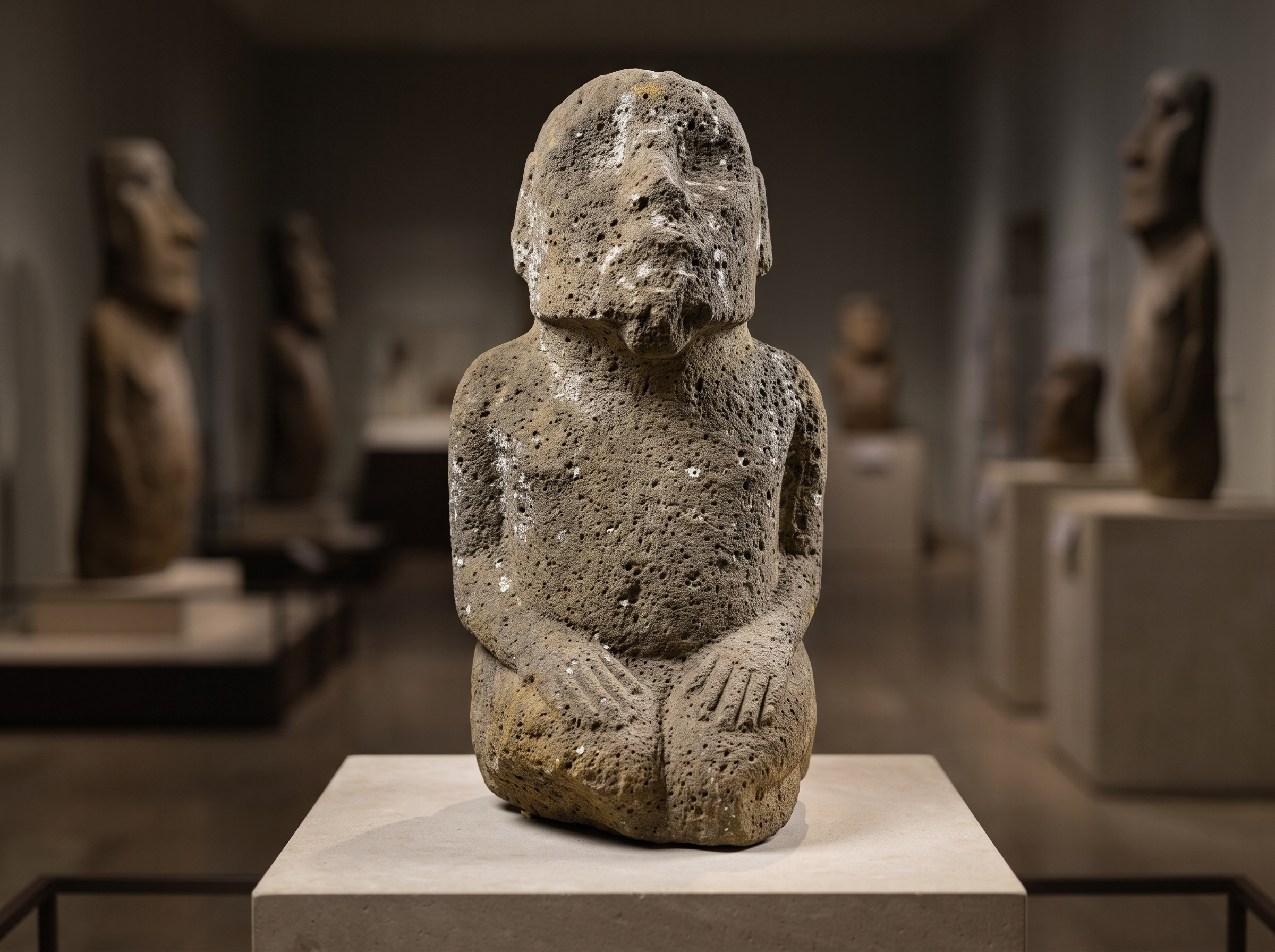
Moai Tukuturi
An atypical, kneeling moai discovered at Rano Raraku, featuring legs and a rounded head, representing an early carving style.
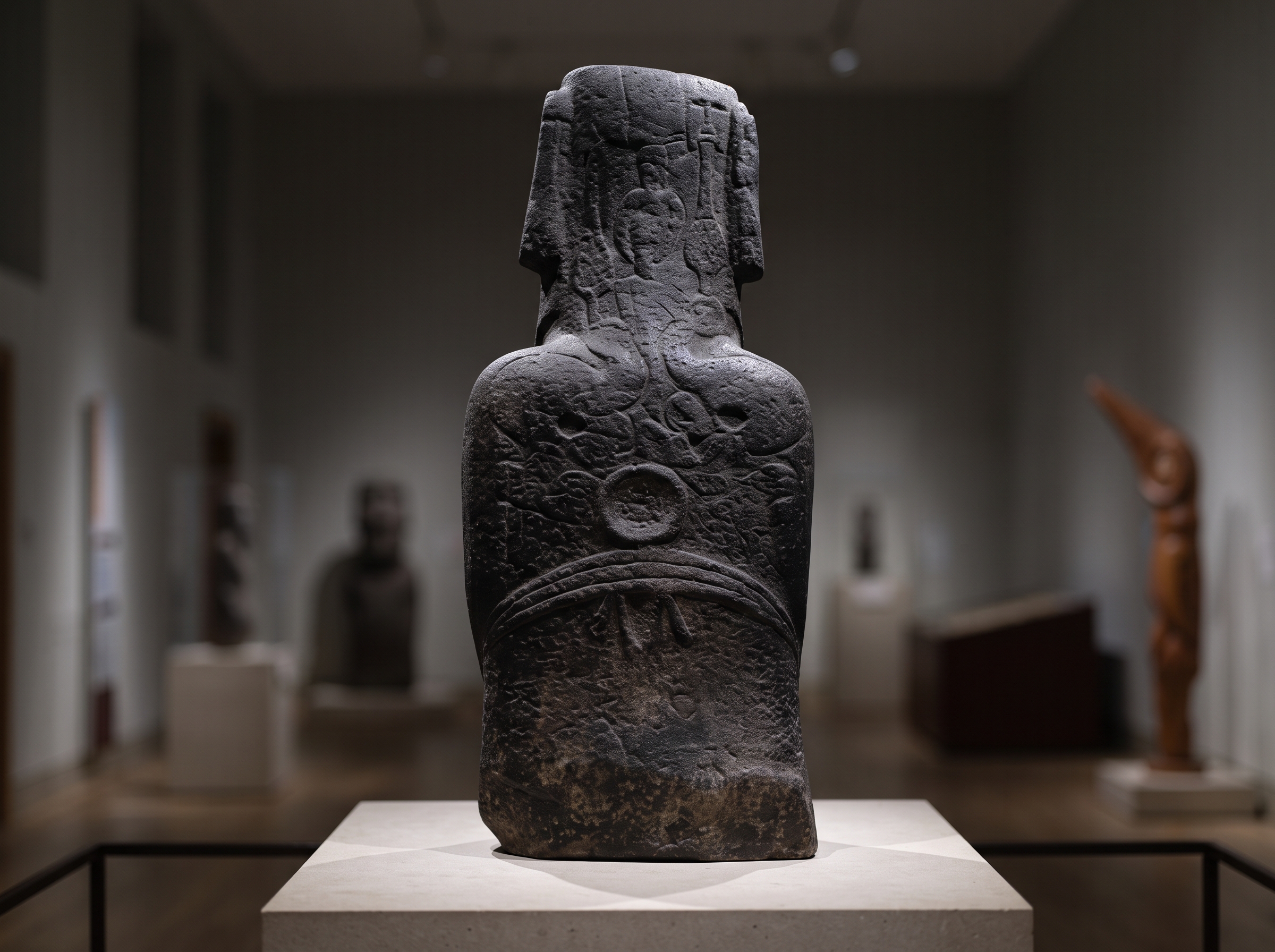
Hoa Hakananai'a
A dark basalt moai with intricate carvings of the Birdman cult (Tangata manu) incised across its back.
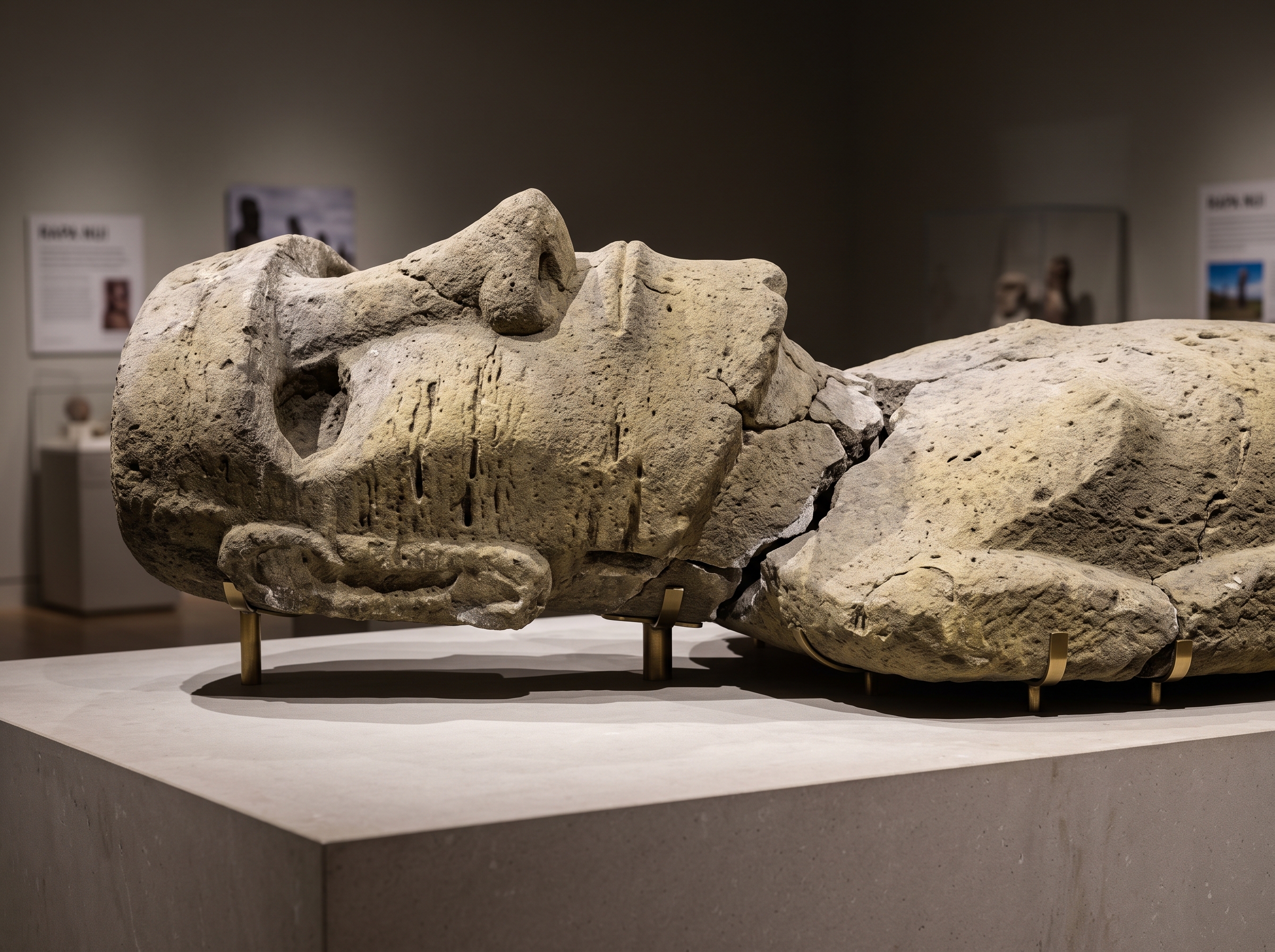
Paro
The tallest moai successfully erected on an ahu, weighing approximately 82 tons and standing nearly 10 meters high.
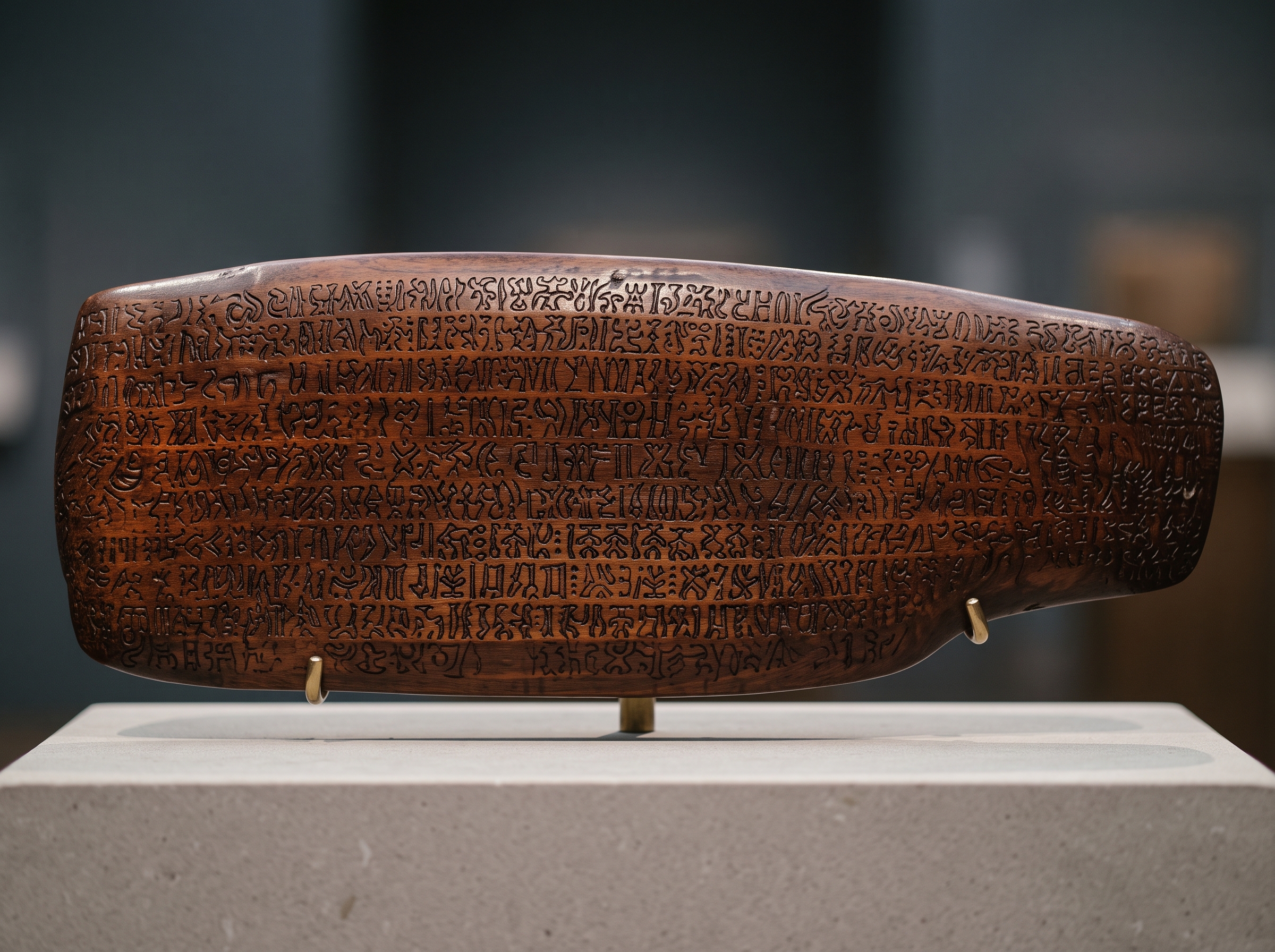
Rongorongo Tablet
A wooden tablet bearing the undeciphered indigenous script of Rapa Nui, written in reverse boustrophedon.
Glossary
- moai: The monolithic human statues carved by the inhabitants of Rapa Nui, representing high-ranking deified ancestors.
- tuff: A light, porous rock formed by consolidated volcanic ash, used as the primary carving medium for the island's statues.
- ahu: The coastal, flat-topped stone platforms that served as sacred shrines and foundations for the standing statues.
- pukao: The cylinder-shaped hair topknot ornaments carved from red scoria rock that sat on top of some statues' heads.