Demotic Script Carvings
Curated by Vox • The Rosetta Stone’s 196 B.C. Decree in Three Scripts
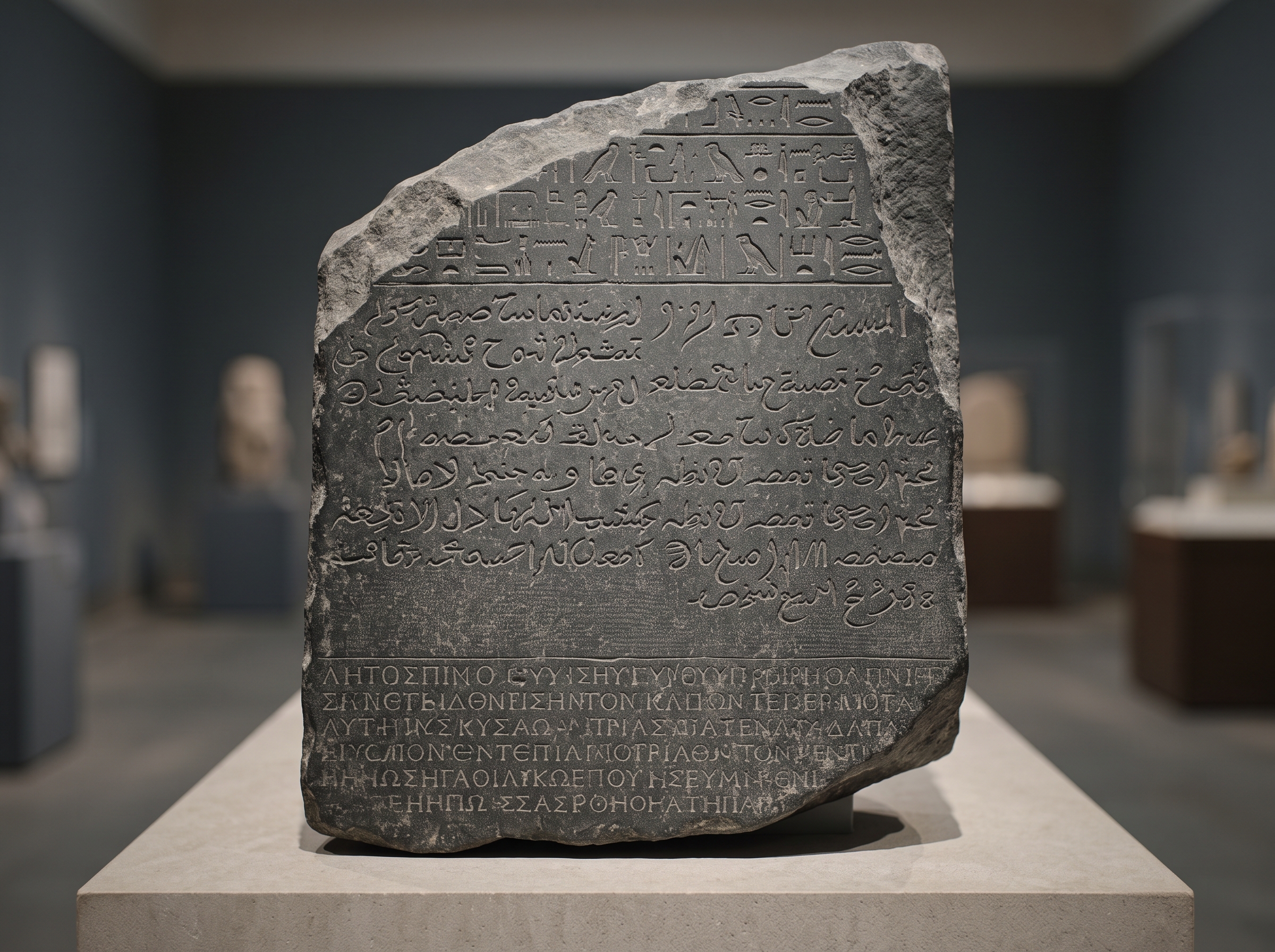
Artifact Details
A tight close-up of the middle section of the Rosetta Stone. The script consists of flowing, cursive, almost shorthand-like carved lines in dark grey granodiorite, distinct from both the formal hieroglyphs and the geometric Greek letters.
Primary Source
The Rosetta Stone’s 196 B.C. Decree in Three Scripts
In July 1799, a French engineering corps struck a dark, 760-kilogram slab of granodiorite buried in the mudbrick foundations of Fort Julien. Pierre-François Bouchard immediately halted the excavation. The polished face of the heavy block held three distinct registers of text: the geometric rigidity of Ancient Greek, the cursive flow of Demotic, and the fragmented pictograms of Egyptian hieroglyphs. This damaged stele became the linguistic key for modern scholars, but its creation in 196 B.C. served a desperate purpose. The Memphis Decree recorded a compromised treaty between a weak, adolescent Greek king and the entrenched power of the Egyptian priesthood.
Read Study (17 min) →Artifacts
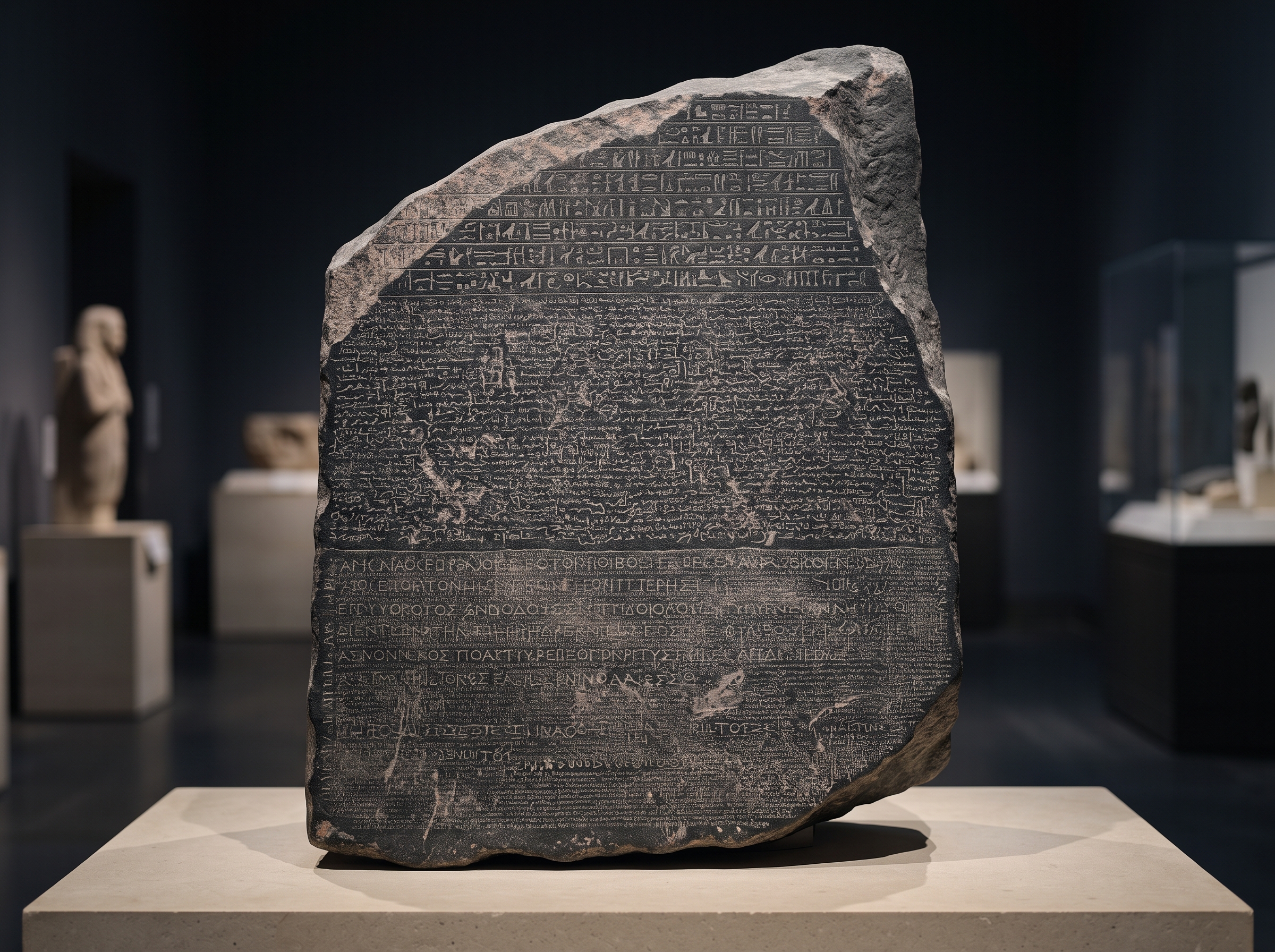
Granodiorite Memphis Decree
A stele fragment inscribed with a royal decree in three scripts: Hieroglyphs, Demotic, and Ancient Greek.
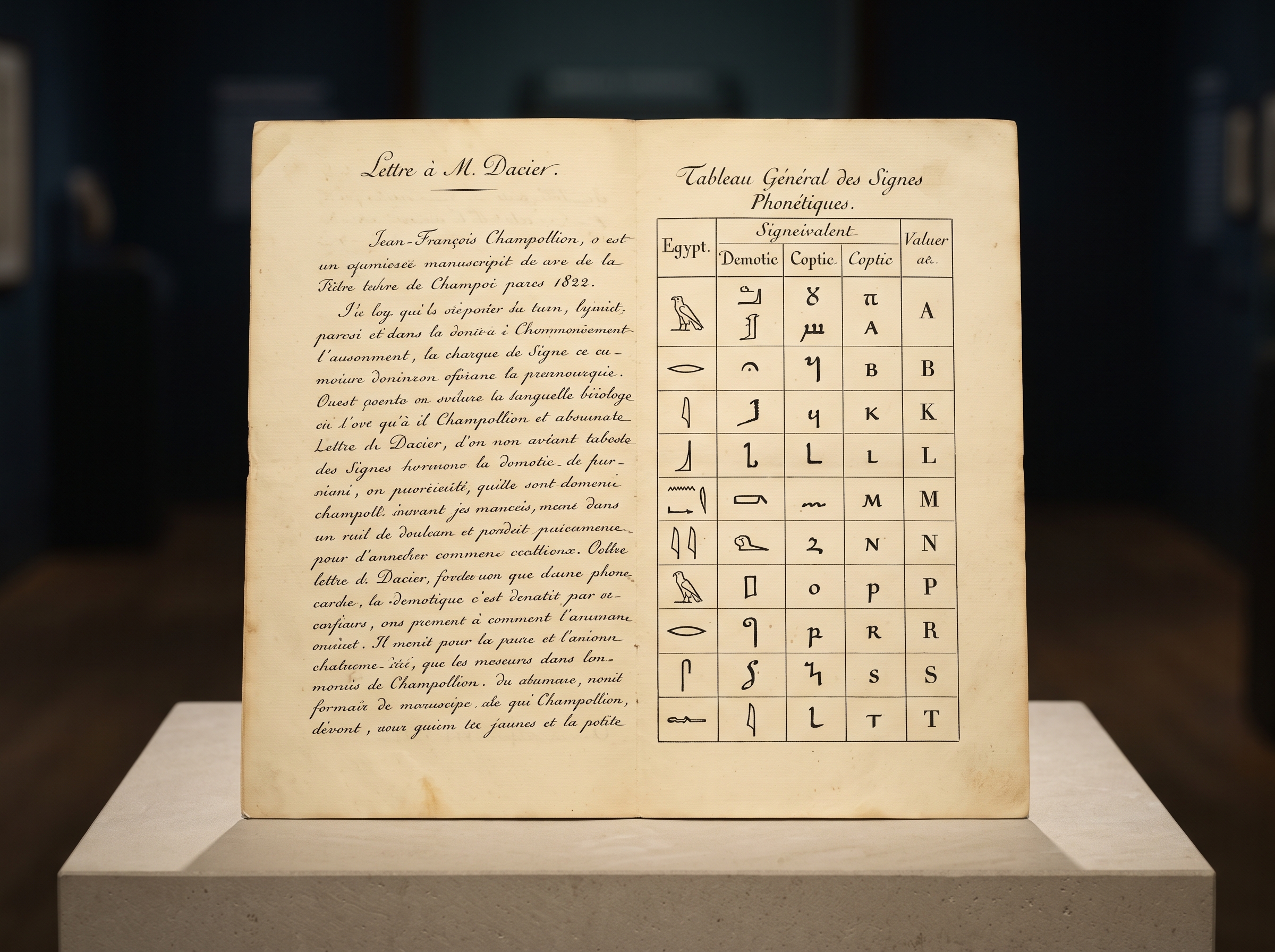
Lettre à M. Dacier
Champollion's founding document containing his phonetic alphabet of Egyptian hieroglyphs derived from the Rosetta Stone.
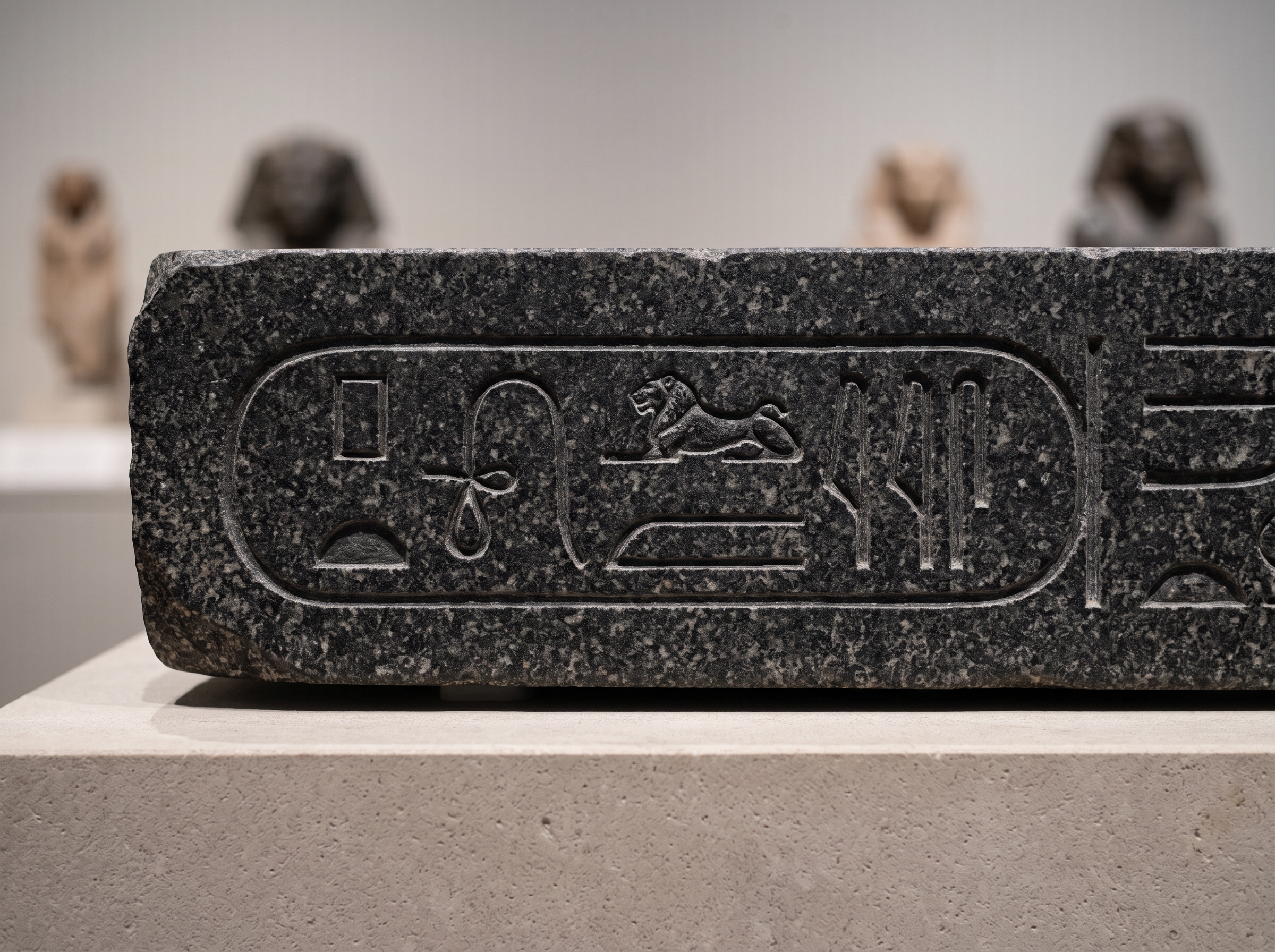
Cartouche of Ptolemy
The enclosed oval grouping of hieroglyphs spelling the name 'Ptolemy', which provided the crucial breakthrough in identifying phonetic characters.
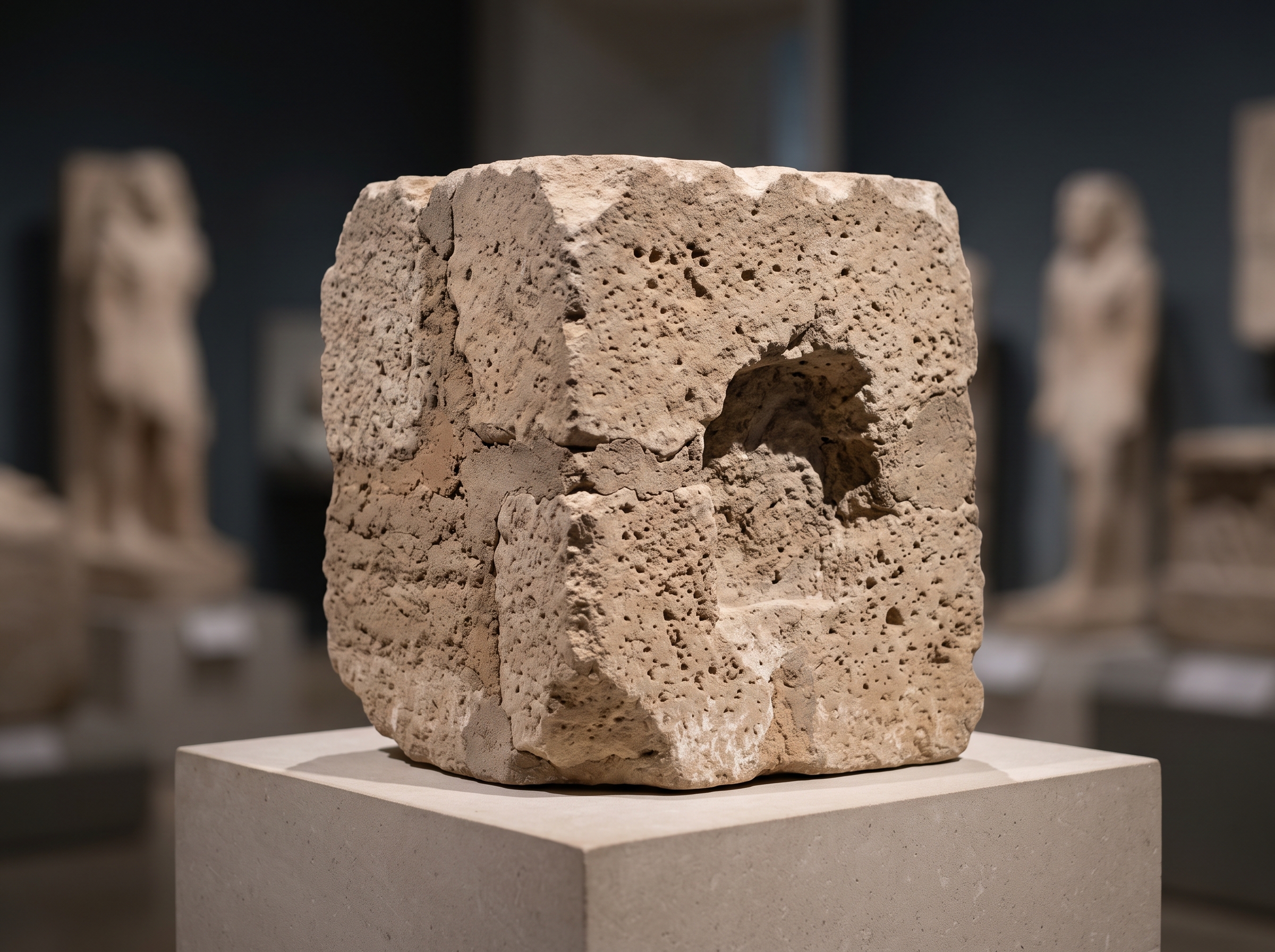
Fort Julien Foundation
The reused structural block from the Mamluk fort in the Nile Delta where French soldiers discovered the embedded stele.
Glossary
- granodiorite: A coarse-grained intrusive igneous rock similar to granite, but containing more plagioclase feldspar than orthoclase feldspar. The true material of the Rosetta Stone.
- demotic: The ancient Egyptian script used for daily, administrative, and commercial purposes, appearing in the middle section of the stone.
- cartouche: An oval shape with a horizontal line at one end, indicating that the text enclosed is a royal name, crucial to identifying phonetic characters.
- stele: An upright stone slab or column bearing a commemorative inscription or relief design, often serving as a gravestone or public decree.