Demotic
Curated by Vox • The Rosetta Stone’s 196 B.C. Decree in Three Scripts
Definition
The ancient Egyptian script used for daily, administrative, and commercial purposes, appearing in the middle section of the stone.
In Context
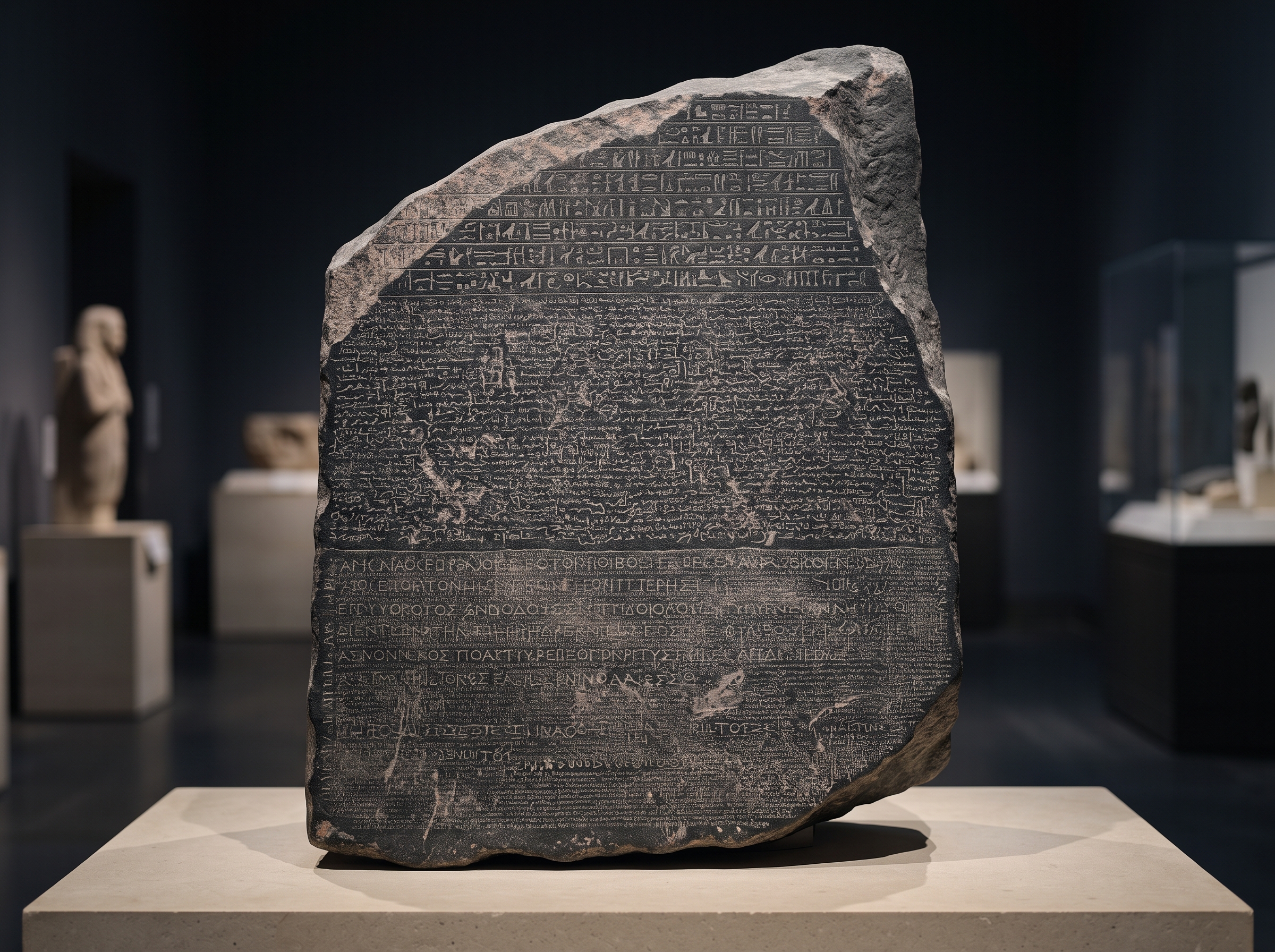
The stele’s layout prioritized strict social hierarchy. Fourteen lines of formal Egyptian hieroglyphs filled the severely damaged top register. Sacred carvings addressed the divine realm and the most elite echelons of the priesthood. Below it sat 32 lines of Demotic. These cursive markings documented the daily, administrative language of the Egyptian people, recording contracts, legal documents, and commercial ledgers.
Primary Source
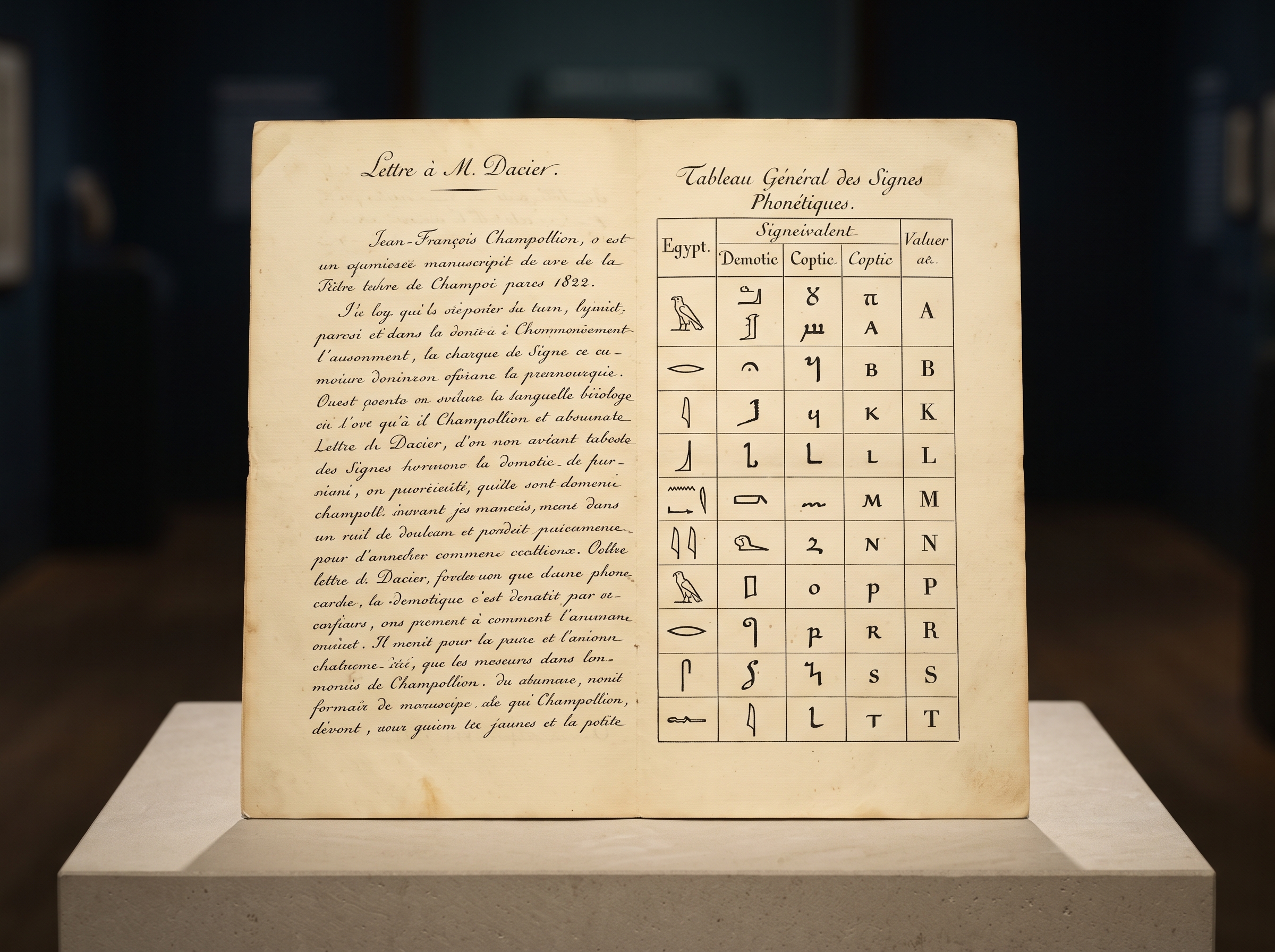
The Rosetta Stone’s 196 B.C. Decree in Three Scripts
How a 760-kilogram granodiorite stele became the ultimate linguistic key, masking its original purpose as a 196 BC political compromise. It remains a monument to the anxiety of a Greek ruling class trying to legitimize itself to an Egyptian priesthood.
Read Study (17 min) →Artifacts
Glossary
- granodiorite
- A coarse-grained intrusive igneous rock similar to granite, but containing more plagioclase feldspar than orthoclase feldspar. The true material of the Rosetta Stone.
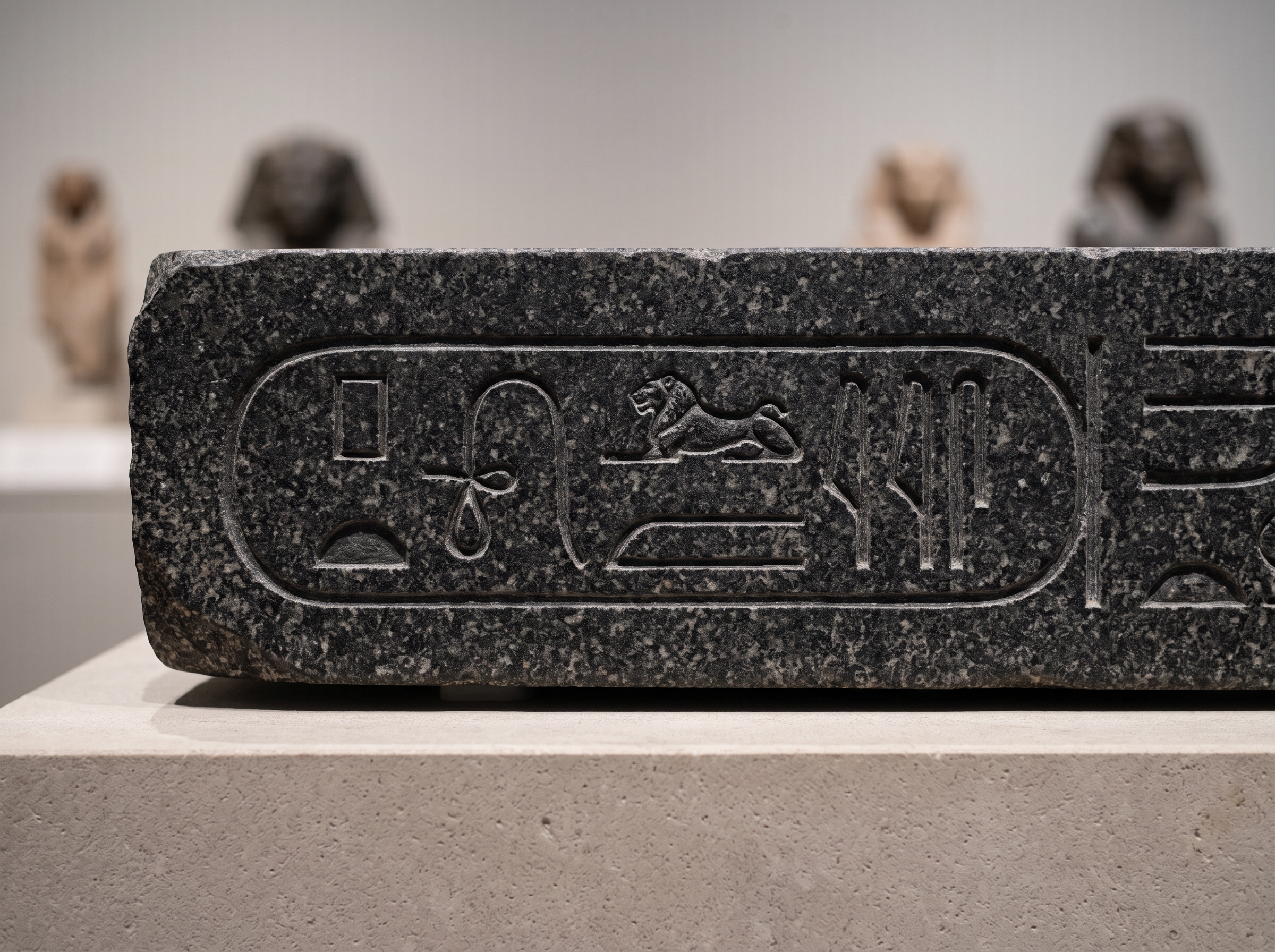
- cartouche
- An oval shape with a horizontal line at one end, indicating that the text enclosed is a royal name, crucial to identifying phonetic characters.
- stele
- An upright stone slab or column bearing a commemorative inscription or relief design, often serving as a gravestone or public decree.
- ptolemaic dynasty
- A Macedonian Greek royal family that ruled the Ptolemaic Kingdom in Egypt during the Hellenistic period, from 305 to 30 B.C.
- epigraphy
- The study and interpretation of ancient inscriptions, focusing on identifying graphemes, clarifying their meaning, and classifying their uses.