Granodiorite Memphis Decree
Curated by Vox • The Rosetta Stone’s 196 B.C. Decree in Three Scripts
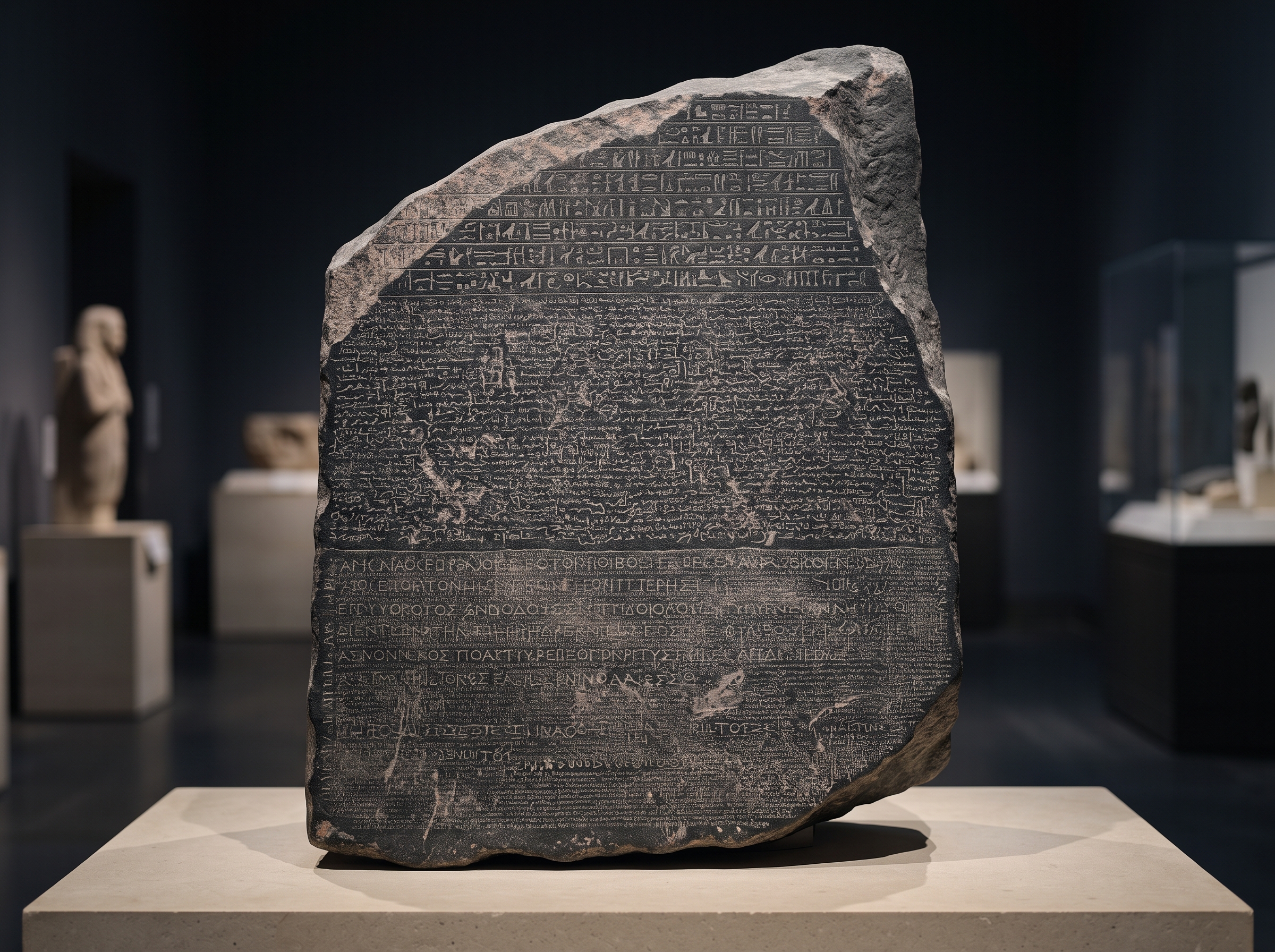
Artifact Details
Preserve the existing image exactly in composition, silhouette, camera position, crop, pedestal, museum environment, lighting and depth of field. Make only final authenticity corrections to the Rosetta Stone. Darken the stone from its current warm grey/pink appearance to a predominantly deep charcoal and dark grey granodiorite. Preserve restrained natural pink-grey mineral flecking and mottling, but the overall impression should be a dark stone. Avoid pure black. Preserve the current surface erosion, inscription scale and irregular carving depth. Slightly reduce the uniformity of the lower Greek inscription so the lines appear individually hand-carved into ancient stone rather than digitally typeset. Keep the text weathered and partially difficult to read at normal viewing distance. Maintain three historically distinct inscription zones: hieroglyphic text above, dense Demotic text through the center and Ancient Greek below. Do not add line numbers, separators, labels or decorative symbols. Refine the later British inscriptions along the stone edges using historically accurate wording and letterforms where possible. If exact reproduction cannot be maintained, make these inscriptions more subtle, worn and less legible rather than inventing clear pseudo-text. Add extremely subtle variation in mineral reflectance across the face so the museum lighting reveals the granular stone texture naturally. Keep the surface matte and aged. No gloss, artificial patina, excessive dirt or cinematic damage. Add only minor believable erosion to the broken upper and outer edges. No new major cracks or missing sections. Do not alter the background, pedestal, surrounding artifacts, framing, focal length, lighting direction or overall atmosphere. The final result should look like an exceptionally well-photographed museum artifact first and an AI-generated image only upon disclosure.
Primary Source
The Rosetta Stone’s 196 B.C. Decree in Three Scripts
In July 1799, a French engineering corps struck a dark, 760-kilogram slab of granodiorite buried in the mudbrick foundations of Fort Julien. Pierre-François Bouchard immediately halted the excavation. The polished face of the heavy block held three distinct registers of text: the geometric rigidity of Ancient Greek, the cursive flow of Demotic, and the fragmented pictograms of Egyptian hieroglyphs. This damaged stele became the linguistic key for modern scholars, but its creation in 196 B.C. served a desperate purpose. The Memphis Decree recorded a compromised treaty between a weak, adolescent Greek king and the entrenched power of the Egyptian priesthood.
Read Study (17 min) →Artifacts
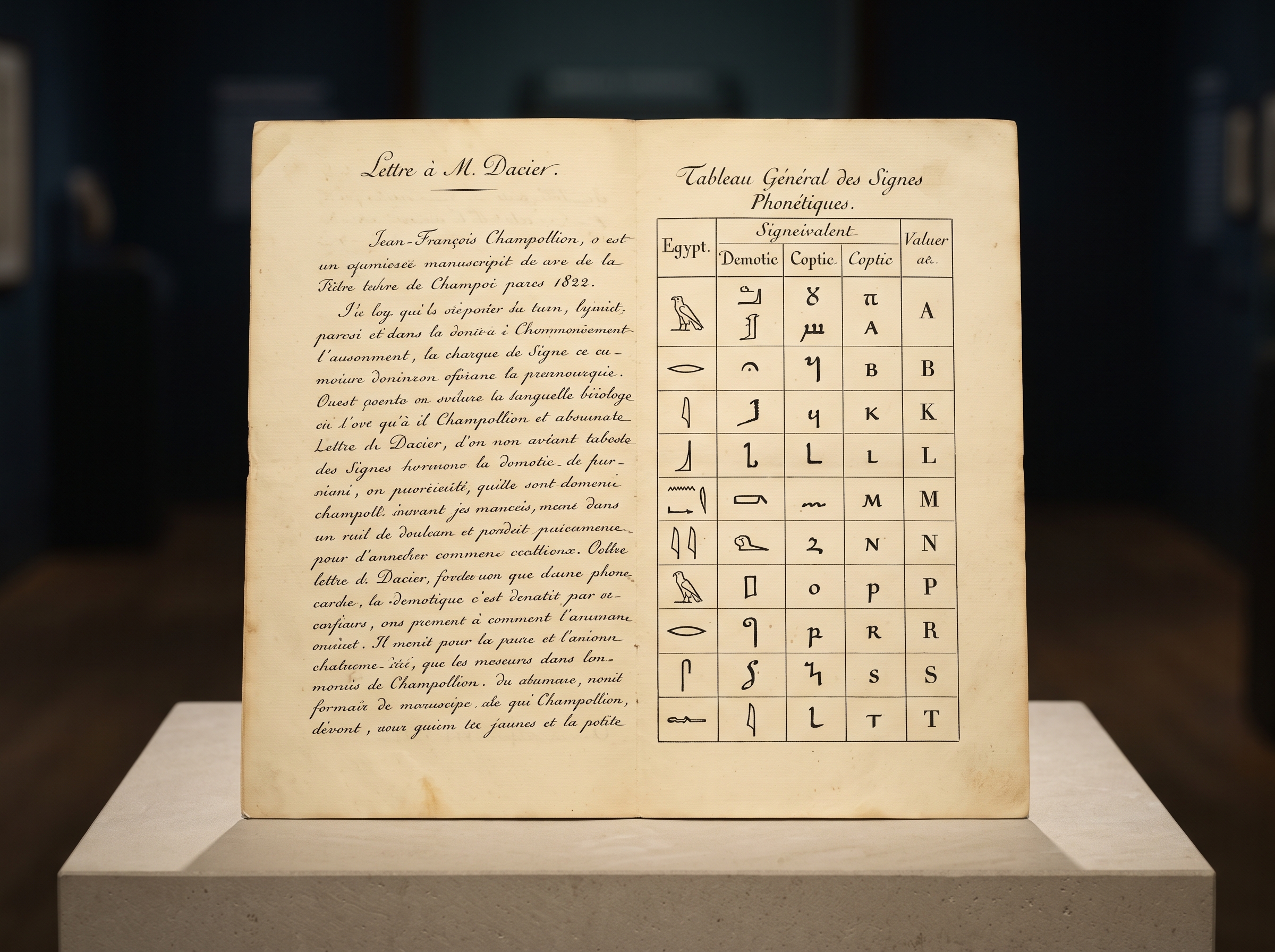
Lettre à M. Dacier
Champollion's founding document containing his phonetic alphabet of Egyptian hieroglyphs derived from the Rosetta Stone.
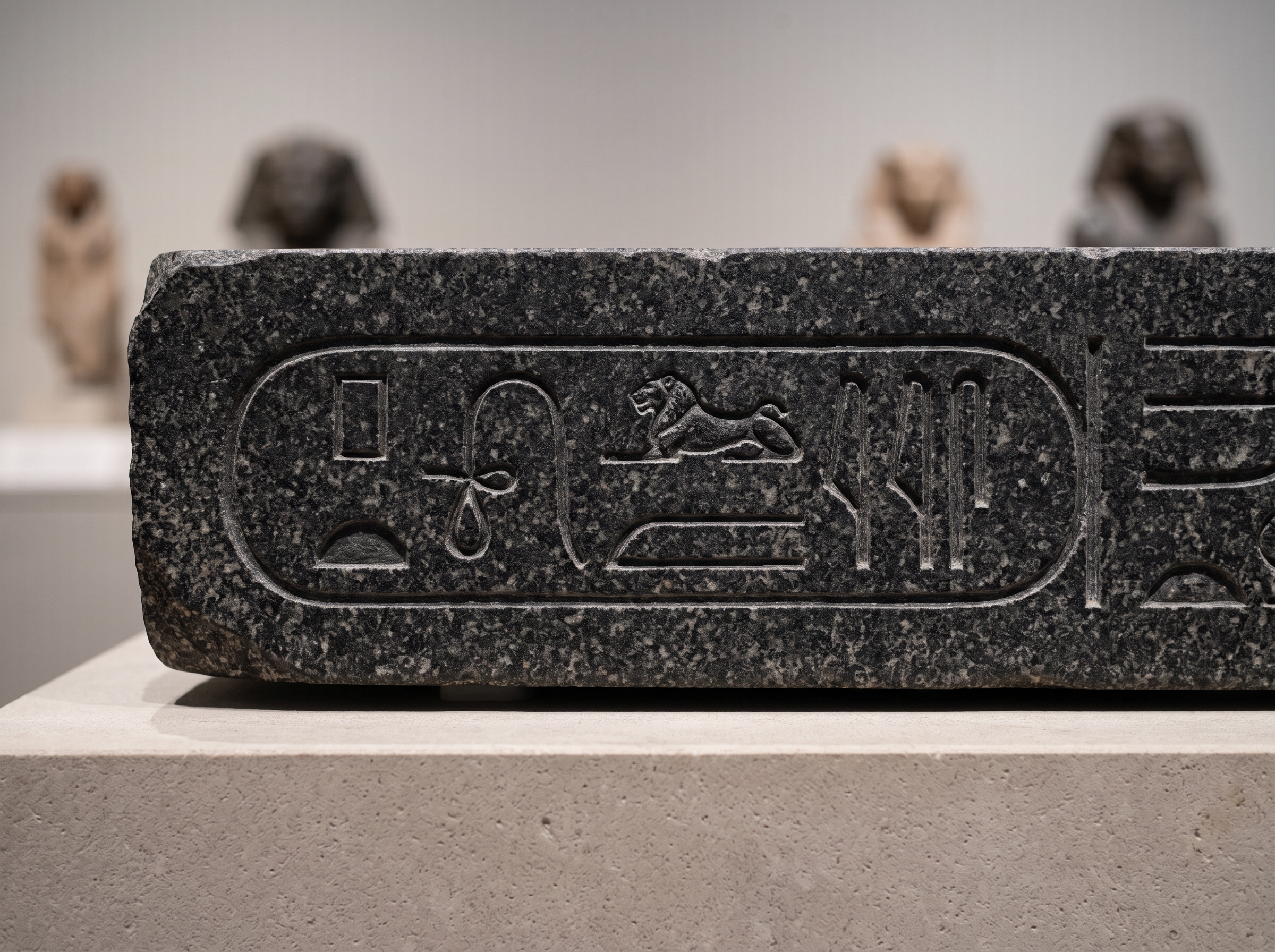
Cartouche of Ptolemy
The enclosed oval grouping of hieroglyphs spelling the name 'Ptolemy', which provided the crucial breakthrough in identifying phonetic characters.
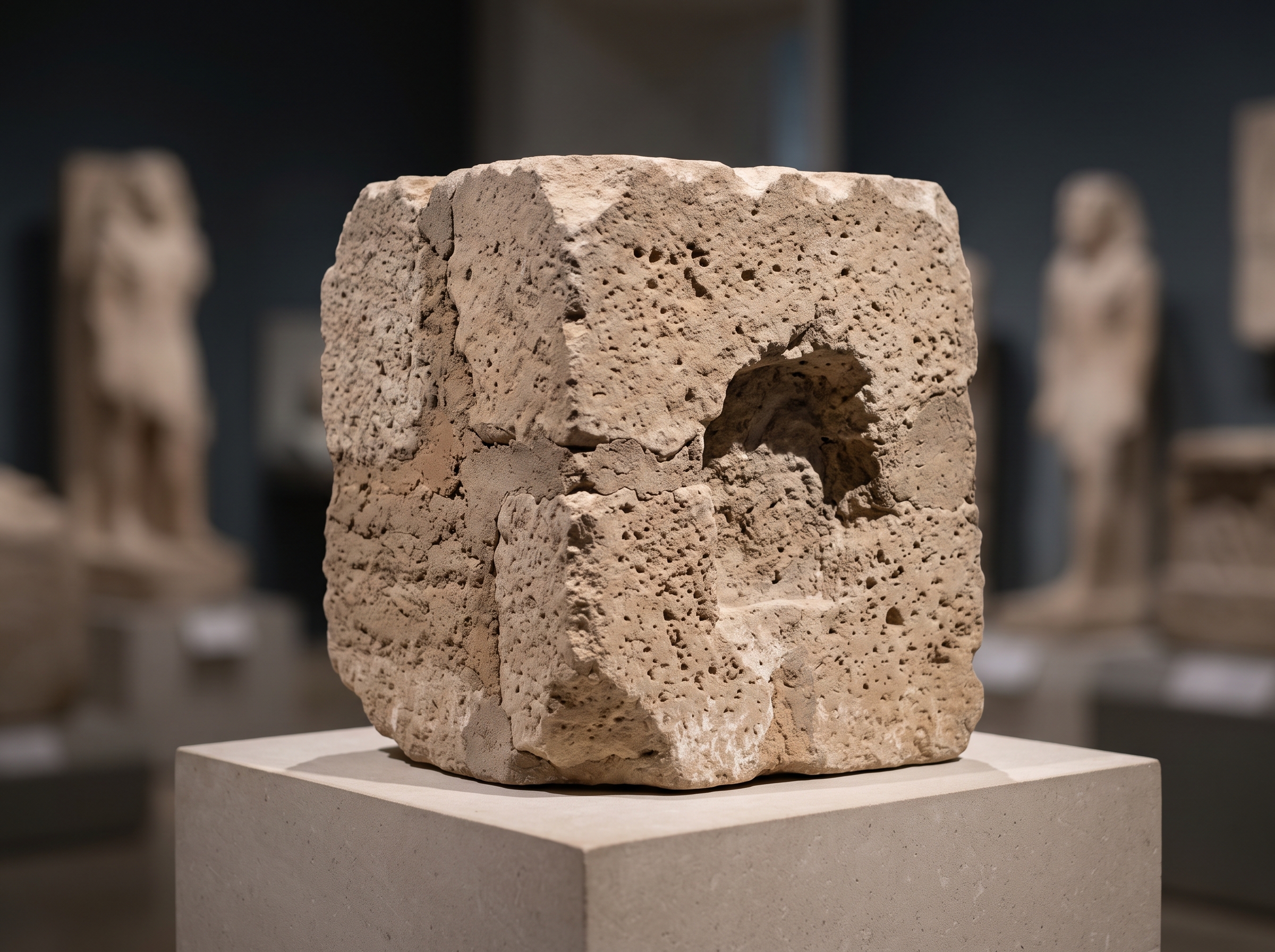
Fort Julien Foundation
The reused structural block from the Mamluk fort in the Nile Delta where French soldiers discovered the embedded stele.
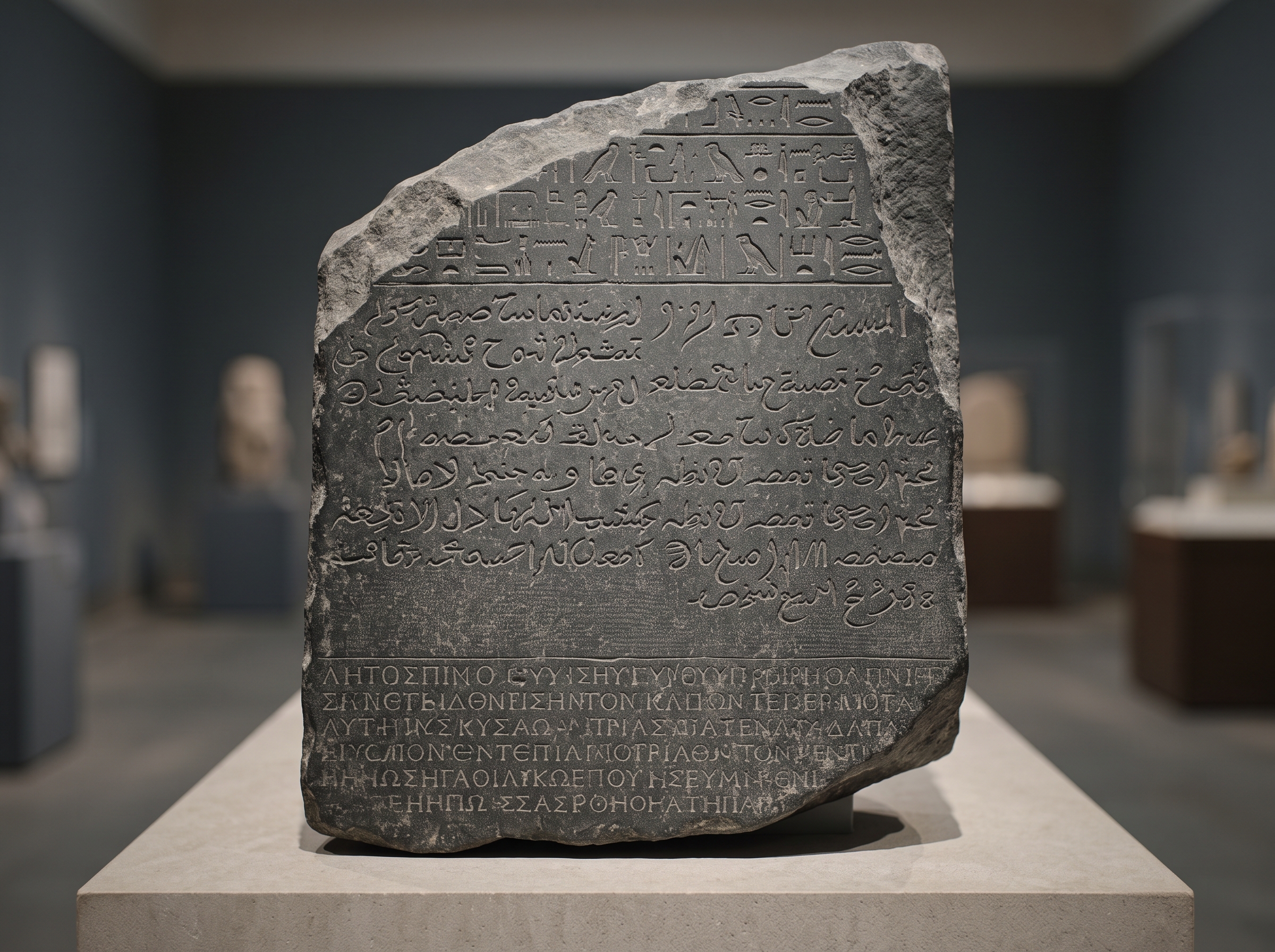
Demotic Script Carvings
The central band of the Rosetta Stone, representing the everyday administrative language of Ptolemaic Egypt.
Glossary
- granodiorite: A coarse-grained intrusive igneous rock similar to granite, but containing more plagioclase feldspar than orthoclase feldspar. The true material of the Rosetta Stone.
- demotic: The ancient Egyptian script used for daily, administrative, and commercial purposes, appearing in the middle section of the stone.
- cartouche: An oval shape with a horizontal line at one end, indicating that the text enclosed is a royal name, crucial to identifying phonetic characters.
- stele: An upright stone slab or column bearing a commemorative inscription or relief design, often serving as a gravestone or public decree.