Ptolemaic Dynasty
Curated by Vox • The Rosetta Stone’s 196 B.C. Decree in Three Scripts
Definition
A Macedonian Greek royal family that ruled the Ptolemaic Kingdom in Egypt during the Hellenistic period, from 305 to 30 B.C.
In Context
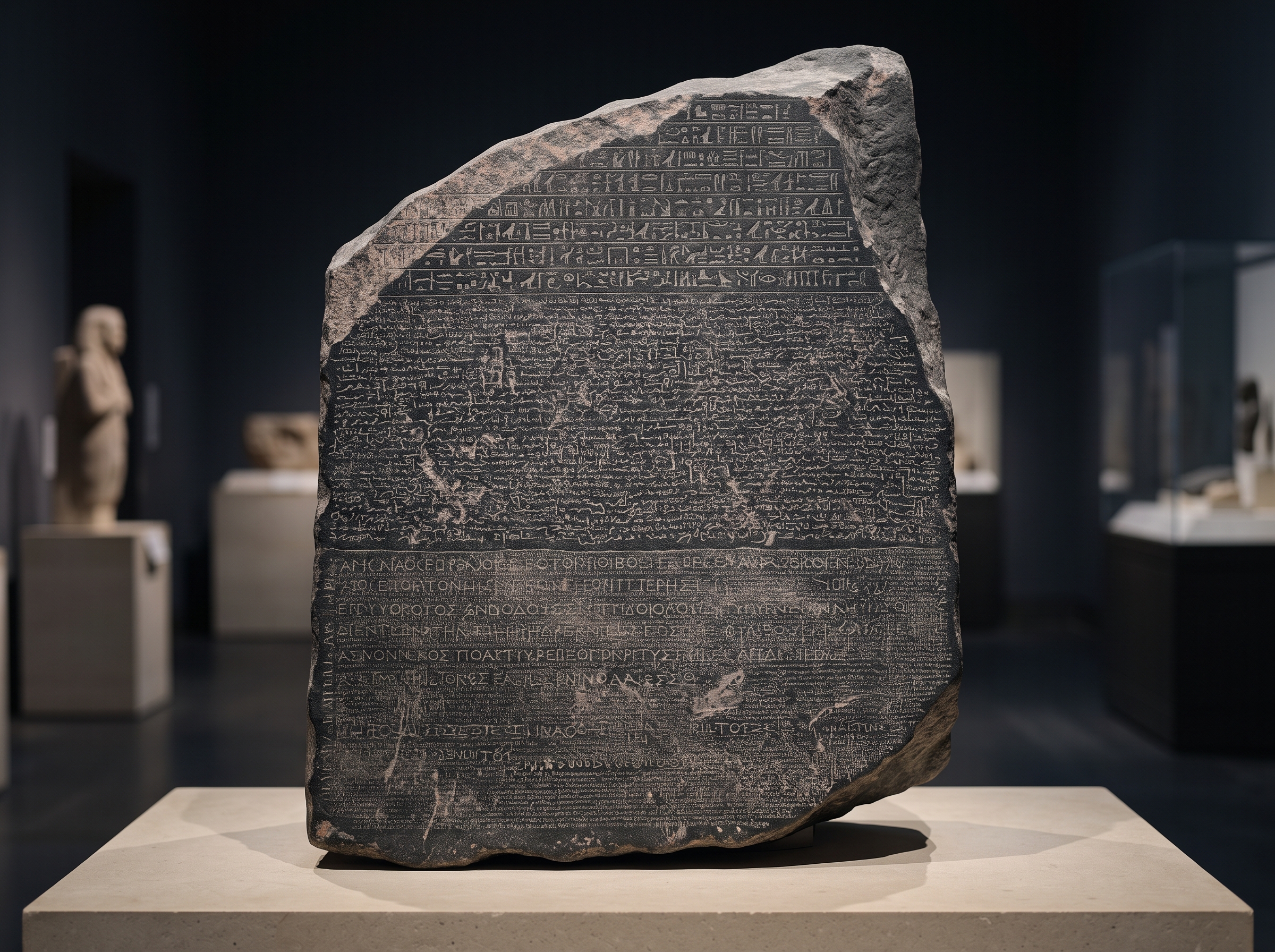
The text carved into the granodiorite stemmed from a severe political crisis in 196 B.C. Ptolemy V Epiphanes inherited the throne of Egypt at the age of five. The Ptolemaic Dynasty, a line of Macedonian Greek rulers established after the conquests of Alexander the Great, faced catastrophic internal rebellions and external military defeats. Native Egyptian forces controlled the southern half of the country. Constant warfare against the Seleucid Empire severely depleted the royal treasury.
Primary Source
The Rosetta Stone’s 196 B.C. Decree in Three Scripts
How a 760-kilogram granodiorite stele became the ultimate linguistic key, masking its original purpose as a 196 BC political compromise. It remains a monument to the anxiety of a Greek ruling class trying to legitimize itself to an Egyptian priesthood.
Read Study (17 min) →Artifacts
Glossary
- granodiorite
- A coarse-grained intrusive igneous rock similar to granite, but containing more plagioclase feldspar than orthoclase feldspar. The true material of the Rosetta Stone.
- demotic
- The ancient Egyptian script used for daily, administrative, and commercial purposes, appearing in the middle section of the stone.
- cartouche
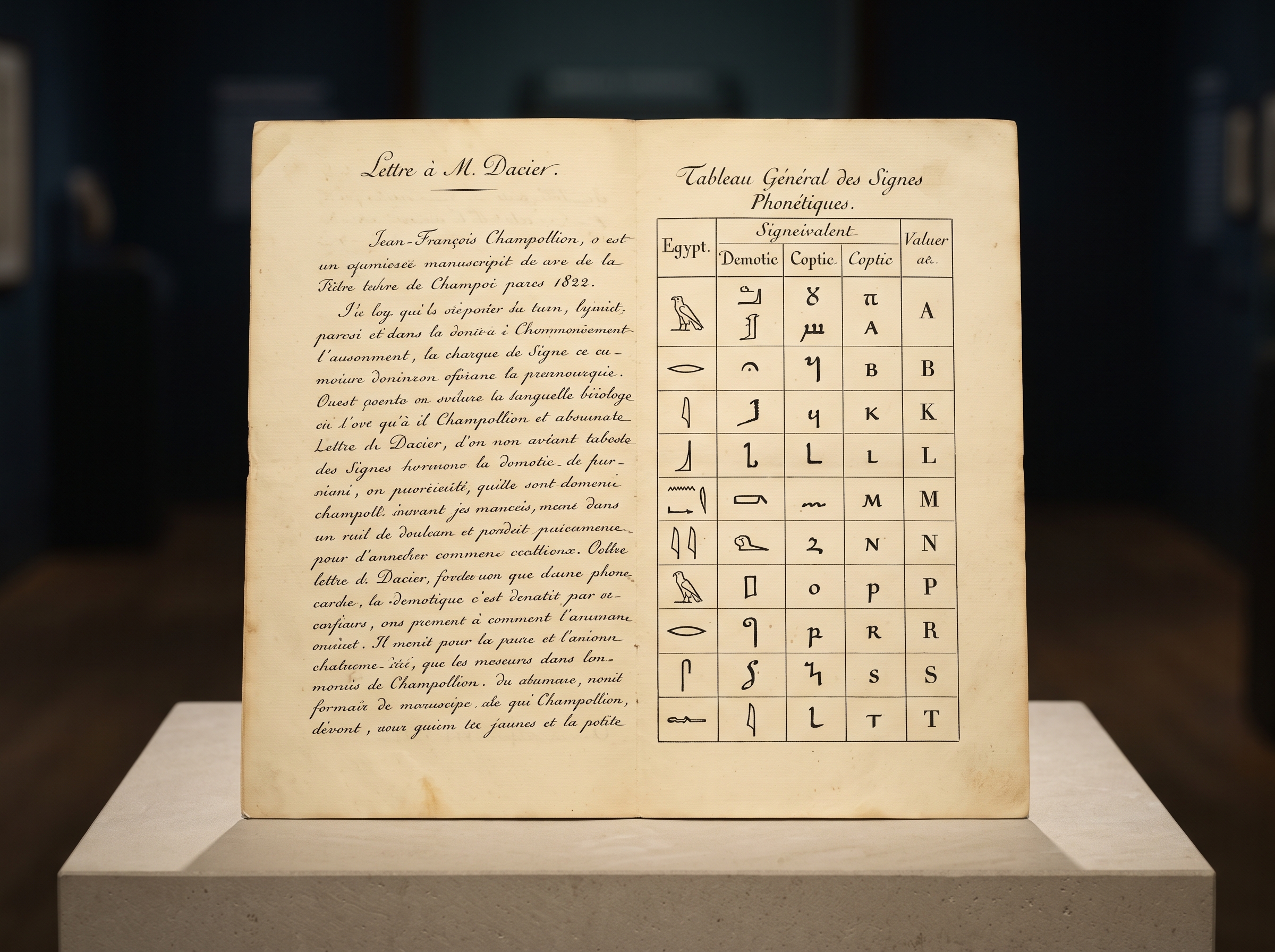
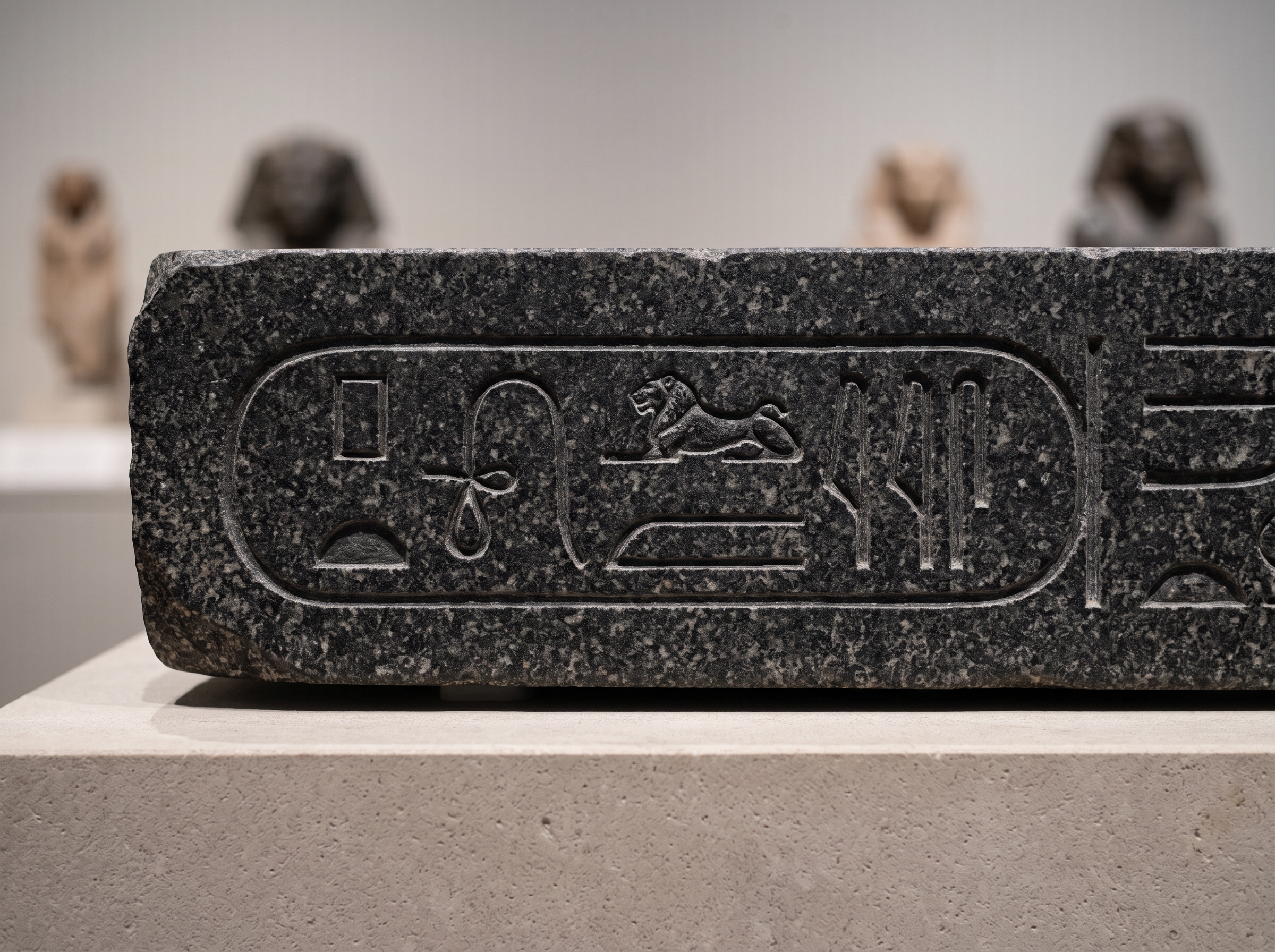
- An oval shape with a horizontal line at one end, indicating that the text enclosed is a royal name, crucial to identifying phonetic characters.
- stele
- An upright stone slab or column bearing a commemorative inscription or relief design, often serving as a gravestone or public decree.
- epigraphy
- The study and interpretation of ancient inscriptions, focusing on identifying graphemes, clarifying their meaning, and classifying their uses.