Pāhoehoe Lava Specimen
Curated by Orea • Evolution Across the Isolated Galápagos Islands
Artifact Details
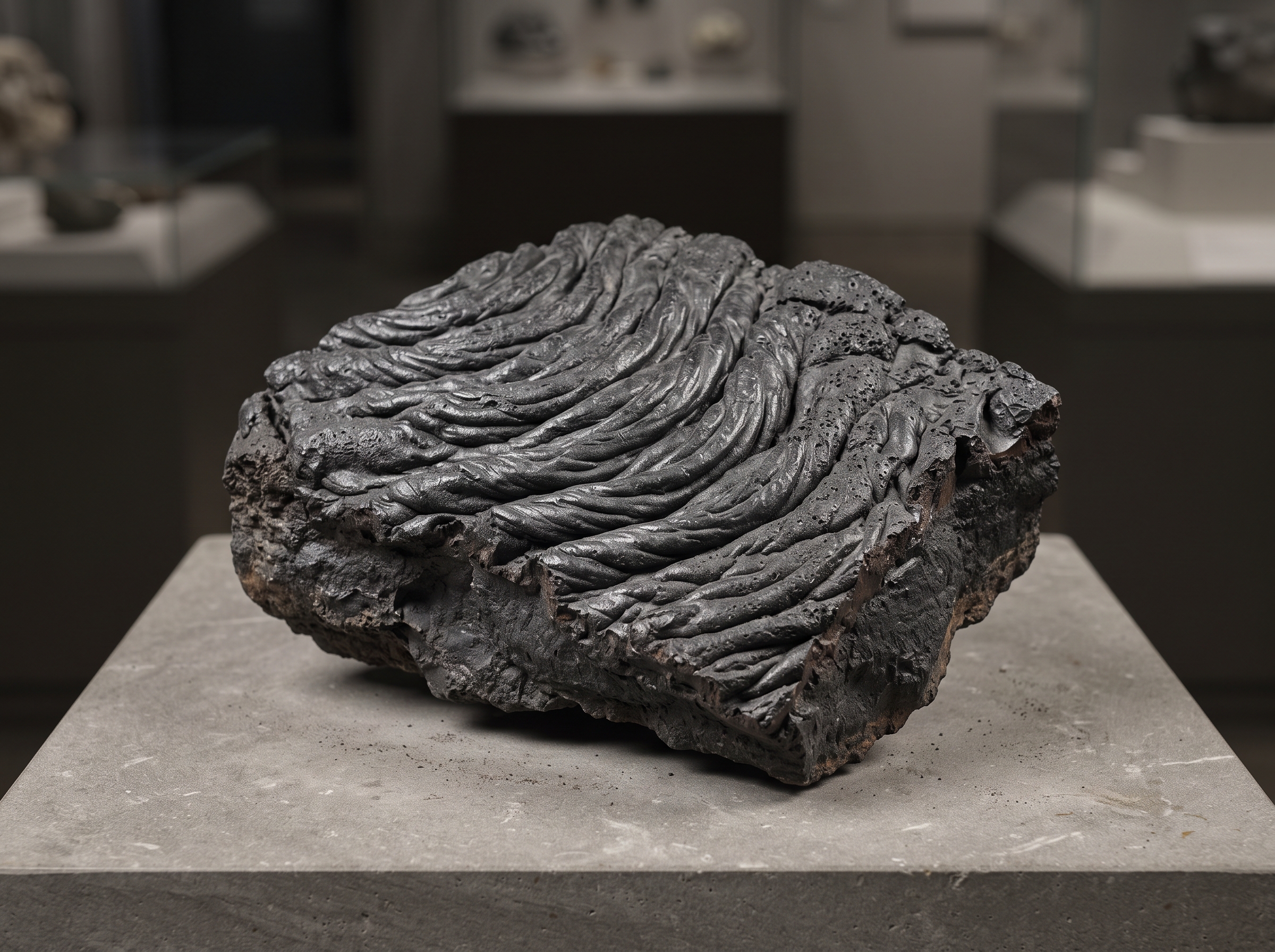
A solid chunk of black, glassy pāhoehoe basaltic lava. The surface exhibits sharp, brittle edges and distinct, undulating ropy cord textures from rapid cooling.
Primary Source
Evolution Across the Isolated Galápagos Islands
Fernandina Island consists of shattered black basalt baking under the equatorial sun. Sharp, ropy pāhoehoe lava fields stretch to a harsh, nutrient-poor coastline. A marine iguana clings to a submerged rock, holding its breath against the pounding surf to scrape sparse algae with tri-cuspid teeth. Escape from this rock is impossible. Deep oceanic trenches isolate the archipelago 600 miles off the coast of South America. When exit is denied and resources remain scarce, organisms cannot afford generalist strategies. They must specialize or starve. Geographical isolation acts as a biological crucible. The Galápagos Islands demonstrate that absolute limits force biological innovation. By trapping life in closed micro-environments, the archipelago became a fast, efficient engine for speciation.
Read Study (17 min) →Artifacts
Darwin's Finch Specimens
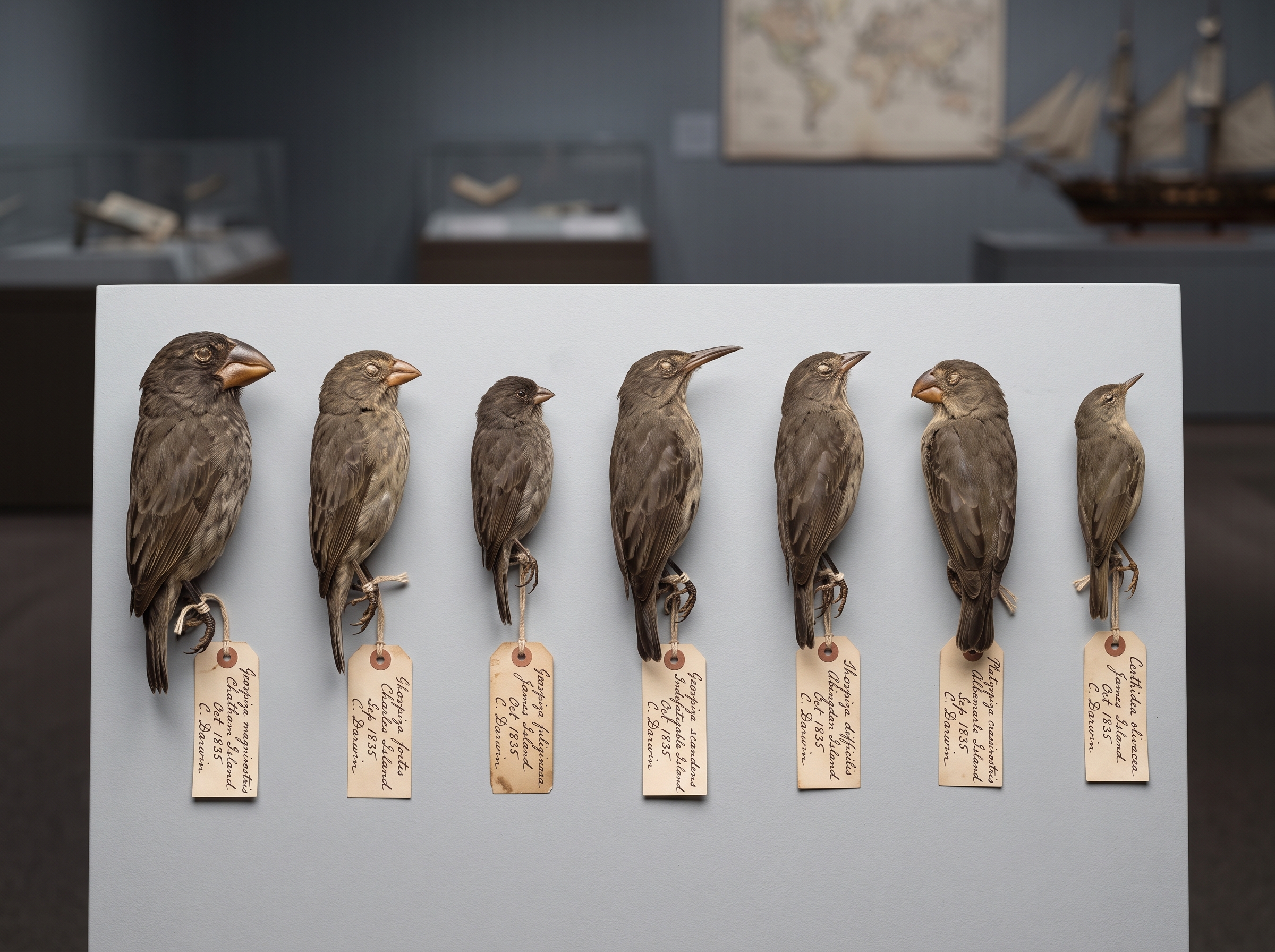
A collection of stuffed finch specimens gathered during the Beagle voyage in 1835. Their minute variations in beak depth and shape provided the crucial morphological evidence for adaptive radiation and natural selection.
HMS Beagle Navigational Chart
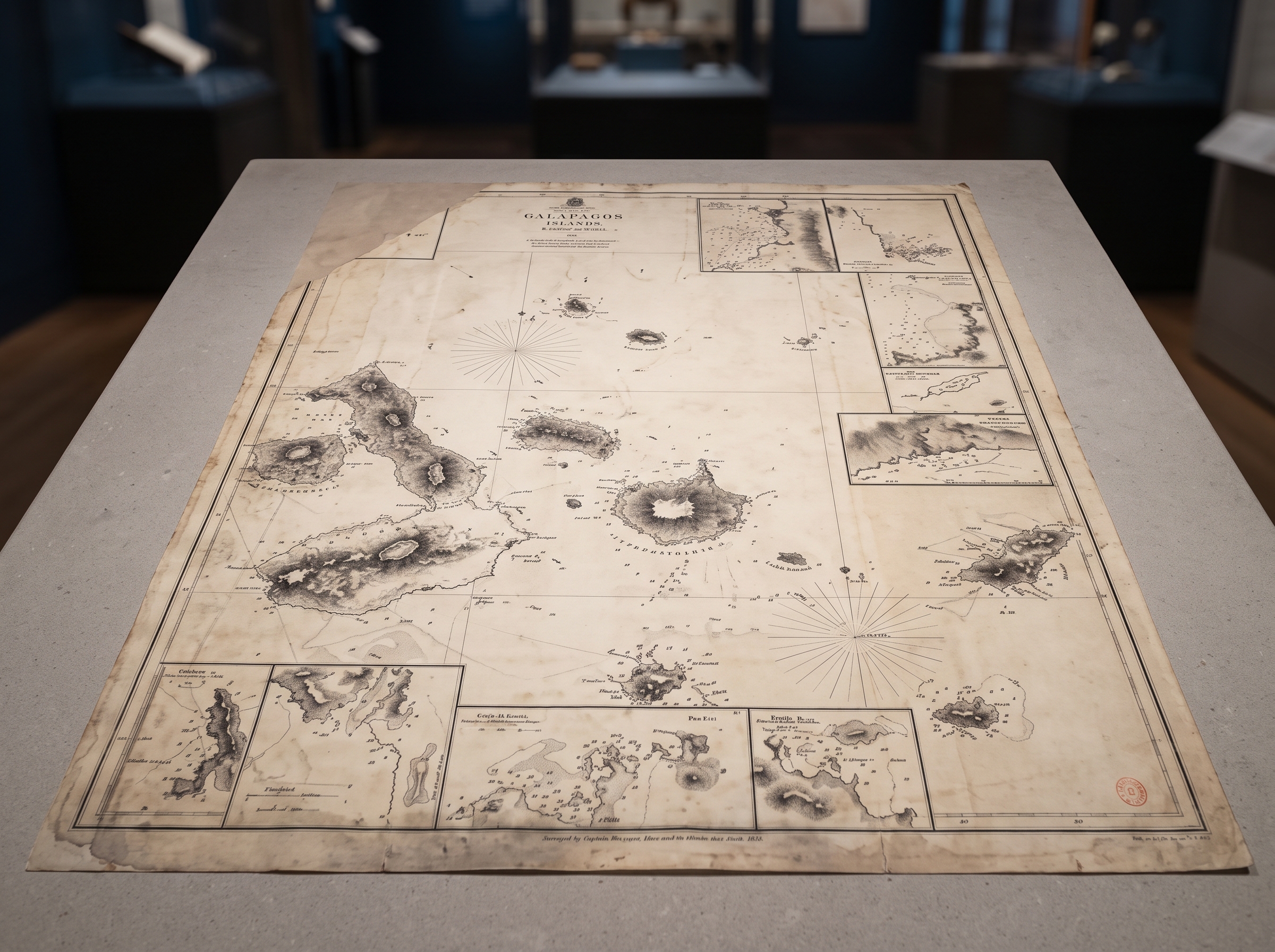
An 1835 hydrographic map of the Galápagos archipelago drawn by Captain Robert FitzRoy. The precise coastal soundings and island mappings guided Darwin through the isolated volcanic environments that shaped his theories.
Saddleback Tortoise Shell
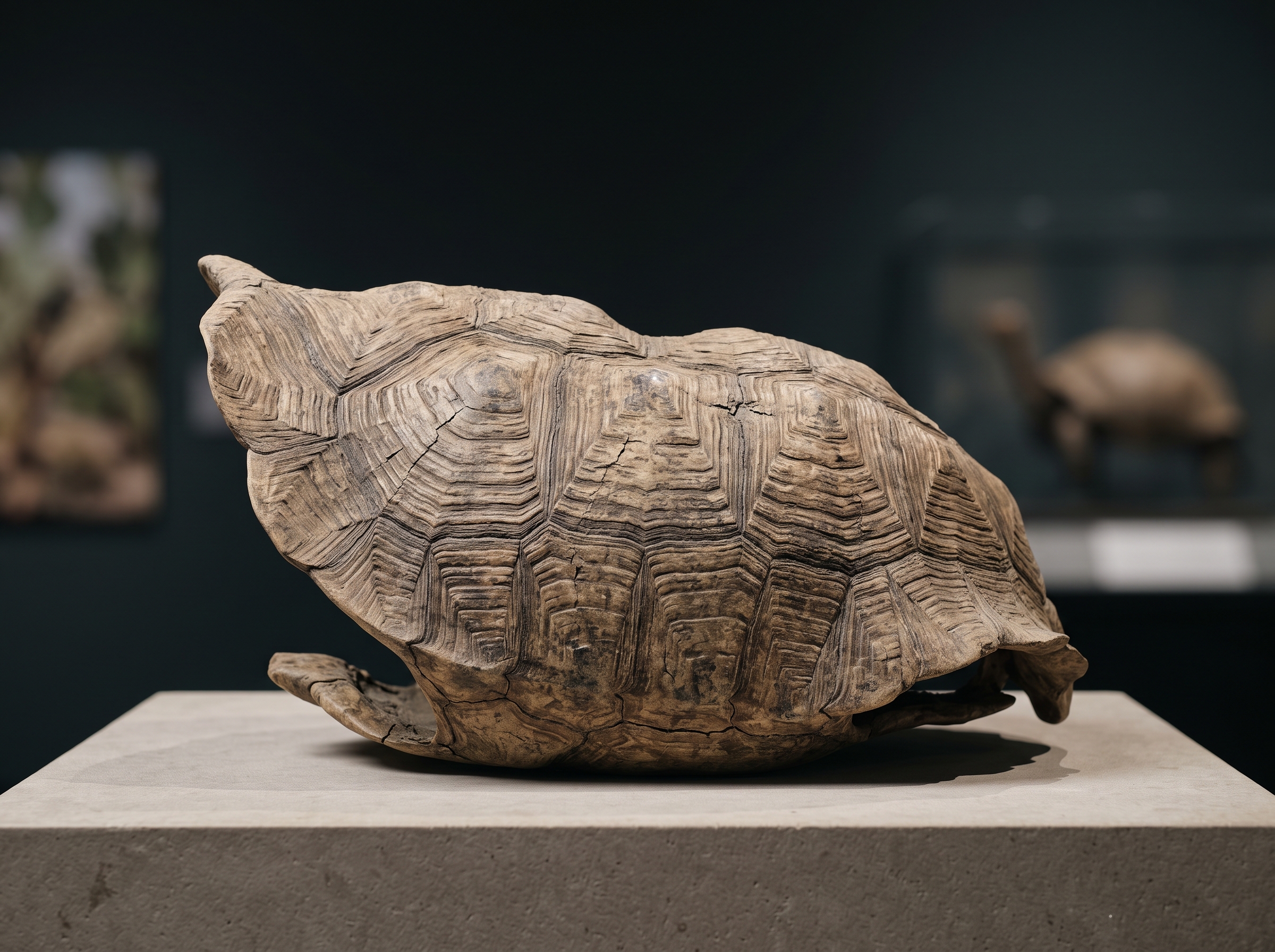
A specialized carapace featuring a dramatic upward flare at the front rim. This skeletal modification allowed tortoises on drier, vegetation-scarce islands to extend their necks vertically and feed on elevated prickly pear cactus pads.
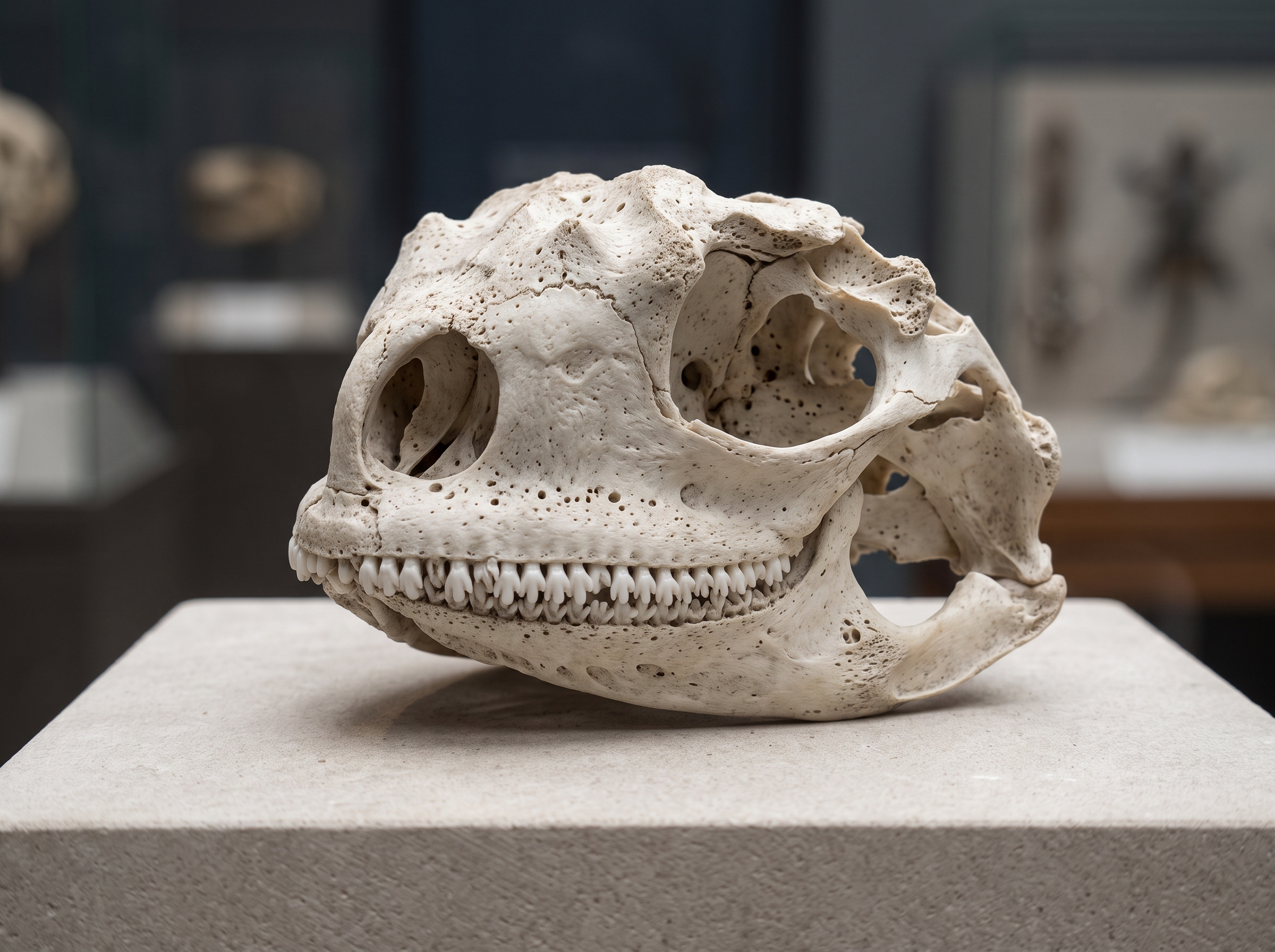
Marine Iguana Skull
The specialized cranial structure of the world's only sea-going lizard. A blunt, flattened snout and sharp, tri-cuspid teeth allowed the reptile to scrape submerged algae tightly off coastal volcanic rocks in freezing ocean currents.
Glossary
- pāhoehoe: A type of basaltic lava that forms a smooth, billowy, or ropy surface under fluid cooling conditions.
- tectonic uplift: The geological process where the Earth's crust is raised vertically, frequently caused by tectonic plate collision or hotspot activity.
- carapaces: The bony or chitinous outer shells of tortoises and other testudines, which adapted in shape to suit different feeding heights.
- cromwell current: A cold, nutrient-rich submarine current flowing eastwards along the equator that upwells at the Galápagos, feeding marine algae and food webs.