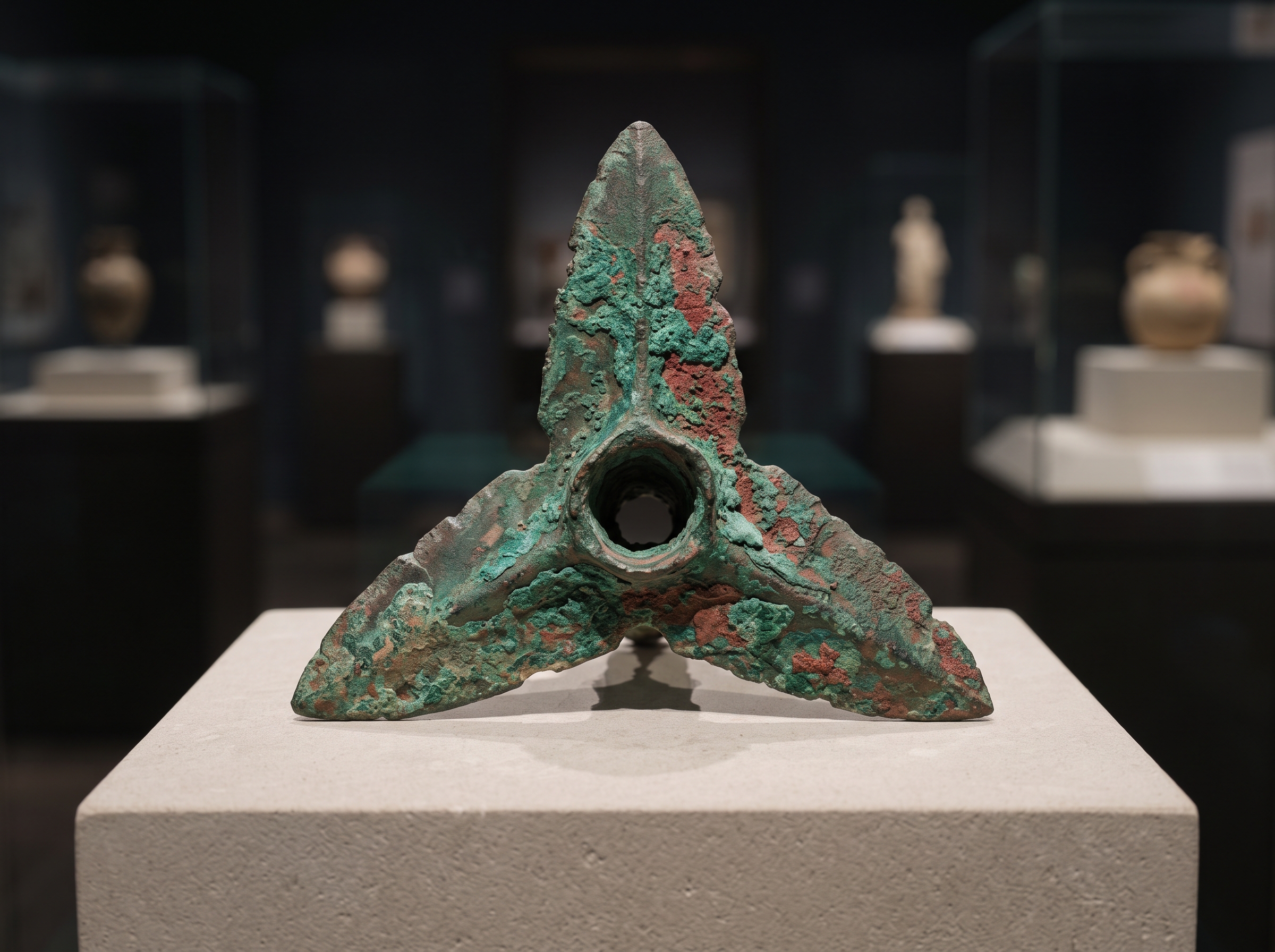
Persian Bronze Arrowhead
Curated by Vera • Electrum and the Lydian Origins of Coinage
Artifact Details
A cast bronze socketed arrowhead featuring a distinct trilobate, three-bladed aerodynamic profile. The hollow central socket shows slight deformation. The entire bronze alloy surface is heavily oxidized, encrusted in thick, textured layers of malachite-green verdigris and reddish cuprite corrosion, with visible blunting, edge chipping, and micro-fractures along the blades.
Primary Source
Electrum and the Lydian Origins of Coinage
Metalworkers in Sardis around 610 B.C. took raw nuggets of electrum pulled from the Pactolus riverbed and crushed them under bronze dies. The resulting stamped lumps were deeply incused with the image of a roaring lion. These were the first true coins in human history. King Alyattes realized that if the state guaranteed the exact weight and purity of this natural gold-silver alloy, merchants would no longer need to weigh bullion for every transaction. State guarantees replaced scales. This innovation generated immense wealth for the Mermnad dynasty. It also created a fatal illusion. By reducing value to an abstract stamped metal disc, the Lydian kings began to confuse stored wealth with actual military strength.
Read Study (17 min) →Artifacts
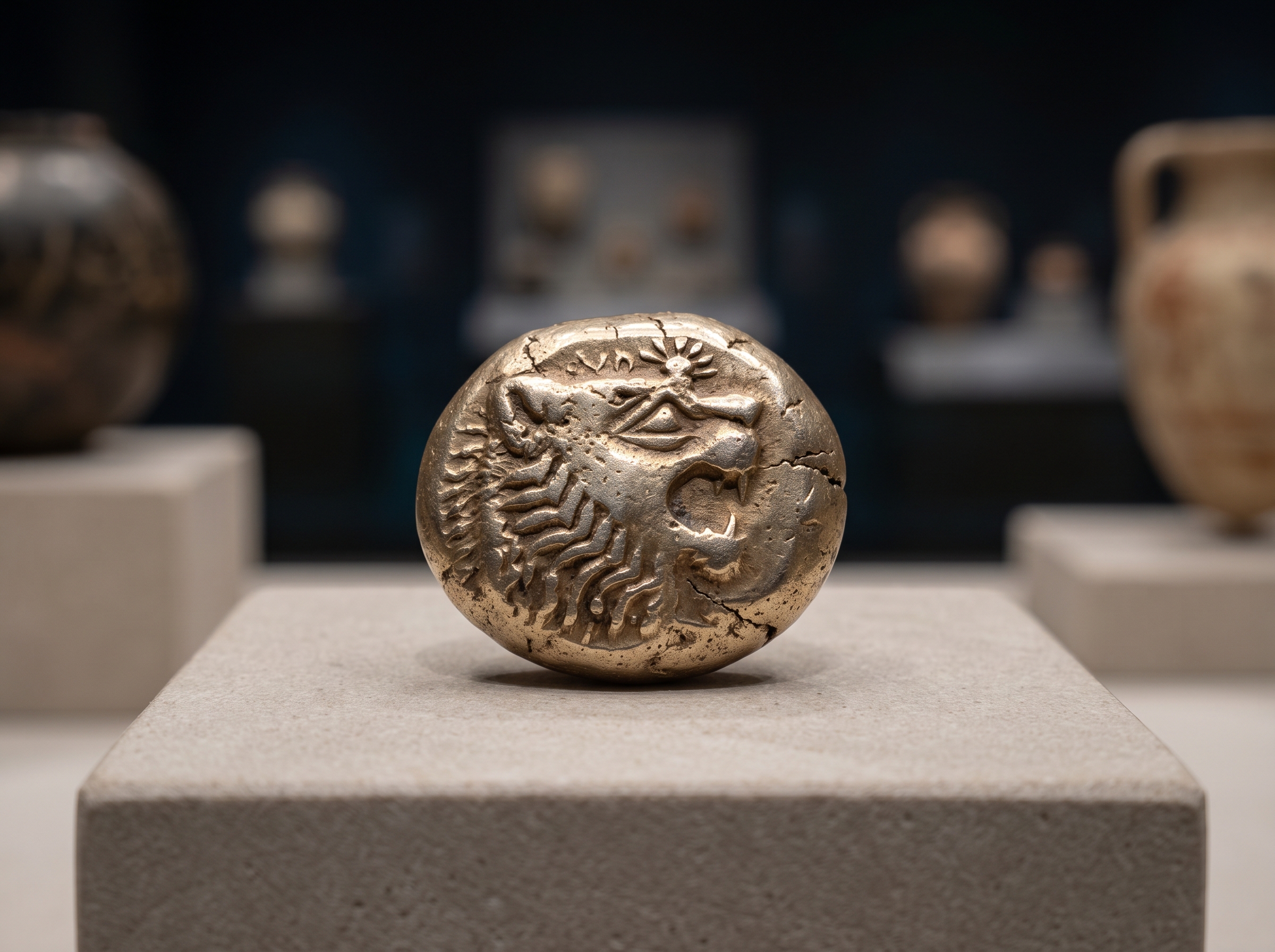
Electrum Trite of Alyattes
A third-stater electrum coin from Sardis, bearing the royal roaring lion seal of King Alyattes.
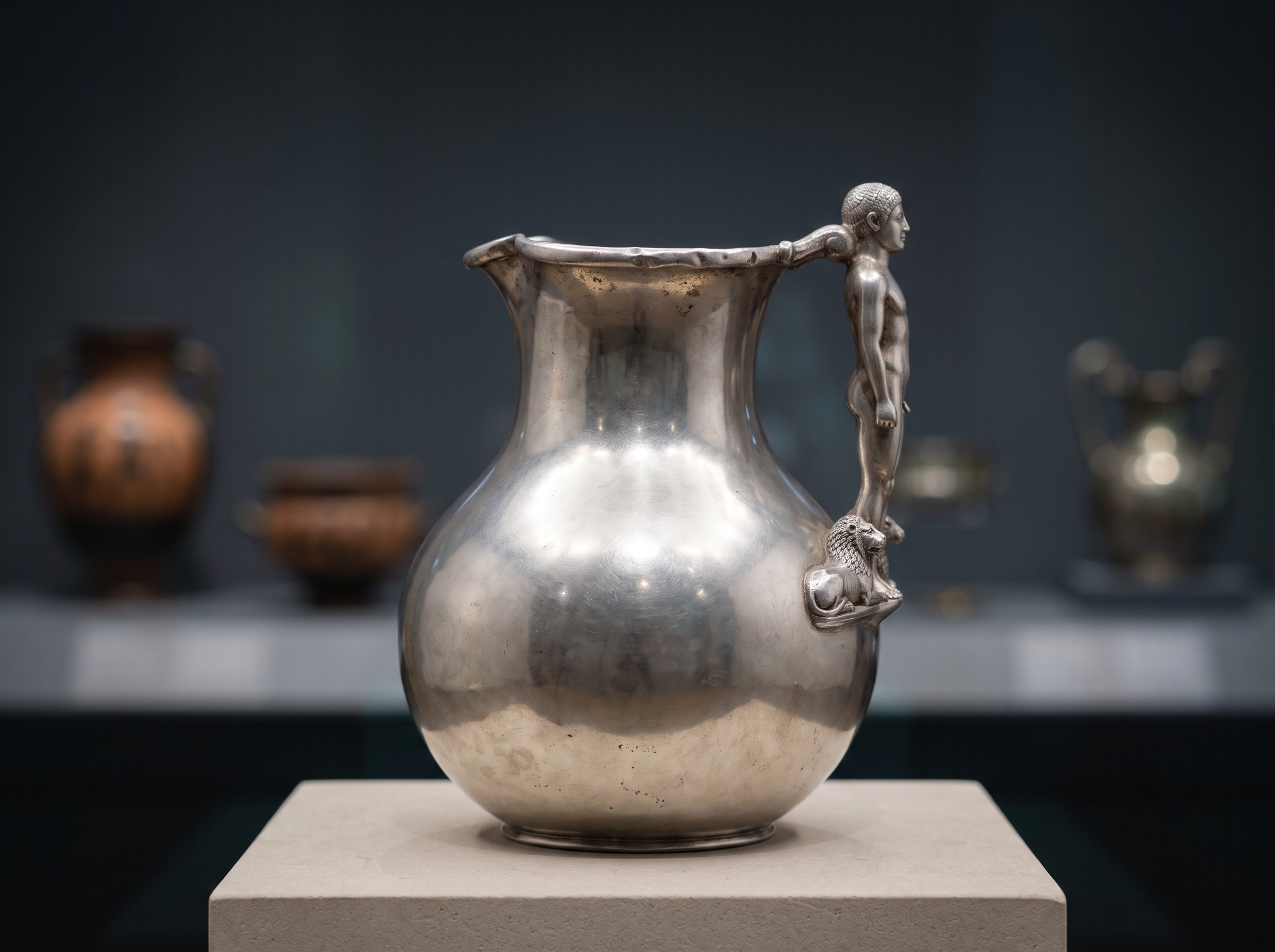
Silver Oinochoe with Kouros
An exquisite silver pitcher from the Lydian Treasure, featuring a cast handle shaped like a young man flanked by lions.
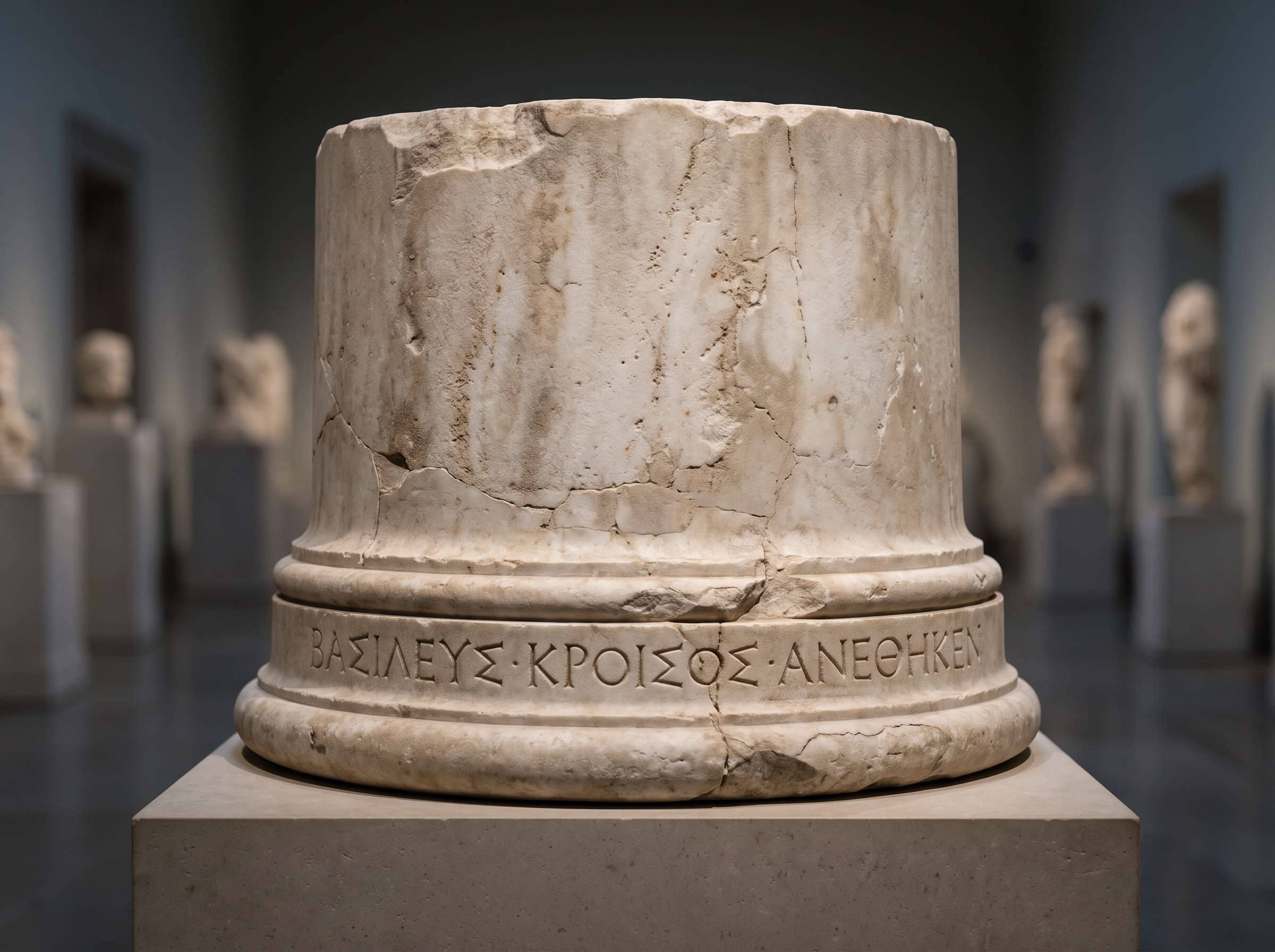
Temple of Artemis Column Base
A massive marble column drum bearing the dedicatory inscription of King Croesus from the Temple of Artemis at Ephesus.
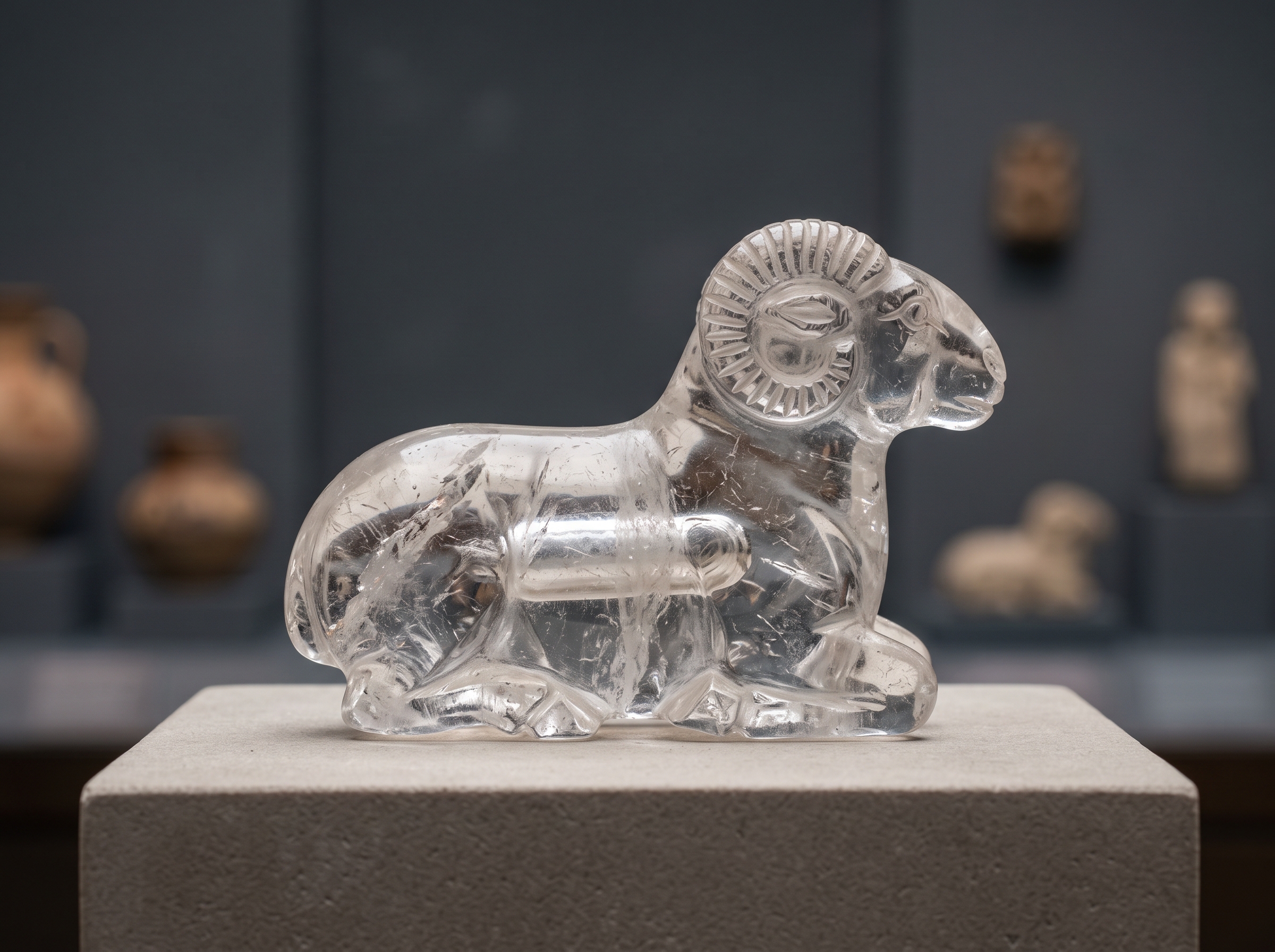
Lydian Rock Crystal Amulet
A carved rock crystal amulet in the shape of a reclining ram, reflecting the elite craftsmanship of the Sardis workshops.
Glossary
- electrum: A naturally occurring alloy of gold and silver, used for the earliest coins.
- stater: The standard ancient Greek unit of weight and currency, heavily utilized by the Lydians.
- mermnad dynasty: The ruling family of Lydia from Gyges to Croesus (c. 680–546 B.C.).
- pactolus: A river near Sardis famous for its rich deposits of electrum.